Tipping Your Key West Fishing Charter Captain And Crew: What Is Standard
Gratuity is the one cost most Key West charter ads never mention, and it is the one that goes straight into the pockets of the people who worked your trip. Here is what tipping norms actually look like across private charters, shared offshore trips, and party boats, based on the real bookable products and their published prices.
Short answer
Standard practice on Key West fishing charters is 15 to 20 percent of the charter price for private trips, $20 to $50 per person on shared small-group trips, and $10 to $25 per person on party boats, paid in cash to the captain or mate. Gratuity is almost never included in the listed price, so budget it on top. On a private trip, the tip usually goes to the captain, who shares it with the crew.
Gratuity is the line item nobody puts in the headline. A private backcountry charter advertises "from $800 per group," a shared catamaran advertises "from $95 per person," and neither number includes the 15 to 20 percent that customary practice says goes to the crew. On the roster of real Key West charters this site tracks, not a single one bundles gratuity into its listed price, which means every booking carries a second, unwritten cost you should plan for before you ever step on the boat.
This guide breaks tipping down the way you will actually encounter it: by trip format, by crew role, and by the specific charters you can book today. The norms here are planning ranges drawn from widely accepted charter-industry custom, not operator promises, and prices and ratings cited are the live figures on each operator's listing at the time of this research pass. For the broader cost picture, see our guide on what a Key West fishing charter actually costs.
How Much Should You Tip A Key West Fishing Charter Captain?
Standard practice runs 15 to 20 percent of the charter price on private trips, the same range restaurants use, applied to a much bigger base. On shared trips the norm shifts to a flat per-person amount, commonly $20 to $50 each, and on party boats it drops to $10 to $25 per person. The percentage falls as group size rises, but the total should still reflect the trip's length and the crew's effort.
The logic behind the percentage is simple. A captain on a private trip like the "Private Sportfisher, Fighting Chair" charter, rated 4.8 across 114 reviews and priced from $1,000 per group for up to six anglers, is running a four-hour offshore trip with live bait, outriggers, and a fighting chair in play. At 15 percent, that is a $150 tip split between captain and mate; at 20 percent, $200. The crew has prepped the boat, rigged tackle, coached six people through fights, and cleaned the catch. The percentage scales with the work.
On the low end of the private spectrum, the "Afternoon Private Deep-Sea Charter" from Drop Off Sportfishing is priced from $54 per person with the per-person rate falling as the group fills toward six, a range of $54 to $156 per person. A group of six at the low per-person rate still produces a modest charter total, and a 15 to 20 percent tip on that total is proportionate. Do not tip per person on a private trip; tip on the group price, the same way you would calculate a restaurant tip on the check rather than on each diner separately.
Here is what the math looks like against real charter prices on the roster, using the customary 15 to 20 percent range:
| Charter | Format | Listed price | 15 percent tip | 20 percent tip |
|---|---|---|---|---|
| Afternoon Private Deep-Sea Charter (Drop Off Sportfishing) | Private, up to 6 | From $54 per person, falling with group size ($54-$156 pp range) | On the group total | On the group total |
| Private Sportfisher, Fighting Chair | Private, up to 6 | From $1,000 per group | $150 | $200 |
| 45ft Cowgirl, AC Cabin | Private, up to 6 | From $1,050 per group | 15% of the group price | 20% of the group price |
| 6-Hour Shared Offshore, Max 6 | Shared, per person | From $250 per person | $30-$50 per person | $50 per person |
| 4-Hour Shared Offshore, Max 6 | Shared, per person | From $200 per person | $30-$40 per person | $40 per person |
| Shared Catamaran, Filleting Included | Party boat | From $95 per person | $14 per person | $19 per person |
Treat these as planning figures, not invoices. The right number for your trip depends on the crew's effort, the trip length, and how the day went, which is exactly why the industry has never settled on a single fixed rate.
Tipping Norms By Trip Type: Private, Shared, And Party Boat
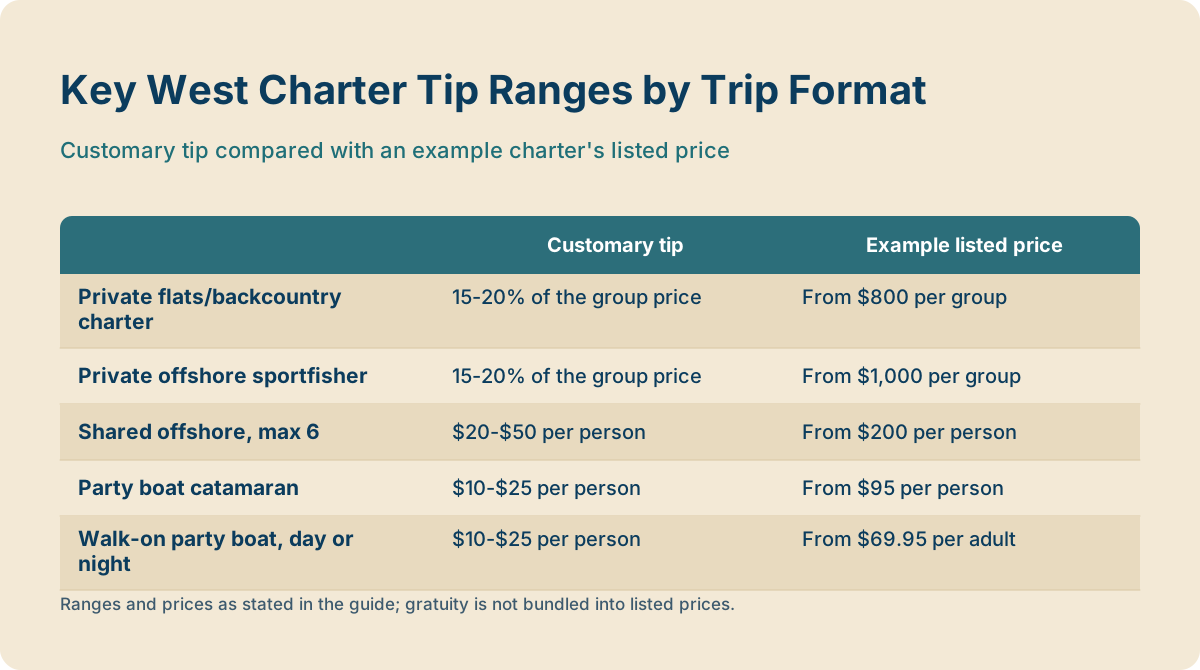
Private charters carry the full 15 to 20 percent expectation because one crew works exclusively for your group all day. Shared small-group offshore trips, capped at six travelers, commonly see $20 to $50 per person. Party boats, with dozens of anglers aboard, run lowest at roughly $10 to $25 per person, and the tip usually goes into a shared jar or bucket that the crew splits at day's end.
The format drives the number because the format drives the service. On a private trip such as the "Private Bay Boat, Live Bait Included" charter from Live Action Sportfishing, rated 5.0 across 14 reviews at from $800 per group, the captain is your guide, your instructor, and your fishing license logistics wrapper for four solid hours. That intensity is what the 15 to 20 percent range compensates.
Shared trips sit in the middle. The "4-Hour Shared Offshore, Max 6" trip, rated 4.0 across 32 reviews at from $200 per person, and its longer sibling, the "6-Hour Shared Offshore, Max 6" at from $250 per person and rated 4.5 across 34 reviews, both pair a small group with a captain and mate who coach everyone individually. Anglers on these trips commonly tip in the $20 to $50 per person band, scaled up for the six-hour run.
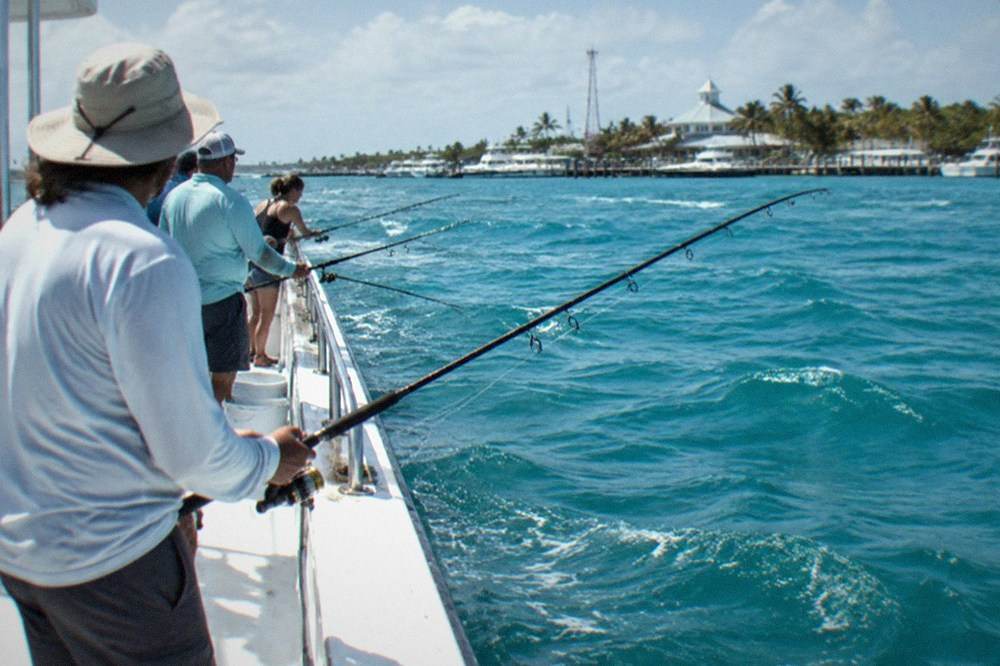
Party boats are a different economy altogether. The "Shared Catamaran, Filleting Included" trip, a 64ft catamaran rated 4.5 across 505 reviews at from $95 per person, carries a big crowd, and the "6-Hour Party Boat" from Gulfstream Fishing runs up to 45 travelers at from $69.95 per adult, with child tickets around $42.95, and has 335 reviews on file. No single customer is getting personal attention for four hours, so the per-person norm drops to the $10 to $25 range, and the tip jar at the galley or the bucket at the fillet table is the standard collection method. Filleting your catch is included on the catamaran, and many anglers add a few dollars per fish at the cleaning station.
| Trip format | Typical group | Customary tip range | Who receives it |
|---|---|---|---|
| Private flats/backcountry charter | Up to 4-6 anglers | 15-20% of the group price | Captain (shares with mate if one is aboard) |
| Private offshore sportfisher | Up to 6 anglers | 15-20% of the group price | Captain and mate split |
| Shared offshore, max 6 | 2-6 travelers | $20-$50 per person | Captain and mate split |
| Party boat catamaran | Up to 45 travelers | $10-$25 per person | Shared jar, split by crew |
| Walk-on party boat, day or night | Up to 45 travelers | $10-$25 per person | Shared jar, split by crew |
If you are still deciding which format fits your budget before you think about the tip at all, the private charter versus party boat comparison walks the tradeoffs in detail.
Is Gratuity Ever Included In The Charter Price?
On the Key West charters tracked by this site, gratuity is not included in any listed price, and this is also the norm across the US charter industry: the listed price covers the boat, the crew's base wages, tackle, and usually licenses, while the tip is a separate, voluntary payment at the end. Some operators add an automatic service charge for very large groups, but that is rare, so assume the tip is on you.
Why the industry works this way deserves a short explanation. Charter crews, especially mates on offshore boats, are commonly paid a modest base wage with the expectation that tips make up a meaningful share of their income, a structure similar to restaurant servers. The "Private Charter, Up to 6 People" trip departing City Marina's Charter Boat Row, rated 4.6 across 53 reviews at from $1,000 per group, lists tackle and license coverage in its inclusions, and gratuity is not among them. Neither is it on the "Private Backcountry, Coolers Included" charter from Recon Sportfishing, rated 5.0 across 19 reviews at from $800 per group for up to four anglers, even though coolers, gear, and license are all covered.
The license point matters here and is worth a brief detour, because it is the one inclusion anglers most often misunderstand. A licensed captain's for-hire vessel license covers the operation of the trip, but it does not exempt individual guests from holding their own personal recreational saltwater license, per the Florida Fish and Wildlife Conservation Commission's license page. Non-resident licenses run $17 for three days, $30 for seven days, or $47 for the year. So even a charter that "includes license" in its marketing is typically referring to the vessel's coverage, not yours.
If a listing or a booking confirmation ever does show a prepaid gratuity or service fee, it will say so explicitly, and you should still feel free to add cash if the crew earned it. But do not assume. When in doubt, ask the captain directly at the dock before the trip: "Is gratuity included, or should we plan for it separately?" No captain in Key West will be offended by the question, and most will appreciate that you asked rather than stiffed the mate by accident.
For a full breakdown of what the base price does and does not buy across formats, the Key West fishing charters compared guide lines up all twelve bookable products side by side.
Who Else Should You Tip On The Boat?
On offshore and party boats, the mate or deckhand often deserves the larger share of the tip, because mates rig your bait, coach your fight, land your fish, and clean your catch while the captain drives. On flats and backcountry skiffs it is usually a captain-only operation, so the whole tip goes to one person. At the fillet table on party boats, a few dollars per fish on top of the standard tip is a common courtesy.
The mate's role is invisible until it is not. On the "Private Sportfisher, Fighting Chair" trip, which runs up to 18 miles offshore with outriggers, a fighting chair, and a live bait tank, the mate is the one wiring baits, clearing lines, and putting anglers into the chair when something big hits. On the 45ft Cowgirl, a Hatteras with an air-conditioned cabin that has been operating since 1965, rated 4.8 across 16 reviews at from $1,050 per group, the crew handles tackle, permits, bait, and guiding for up to six anglers. When you hand the captain a tip at the end, the customary move is to say "this is for you and the mate," which signals the split without you having to do the division yourself. More of these guides are collected on Key West Fishing Tours.
Flats and backcountry trips are simpler. The "Tarpon Flats Charter, Ramrod Key" trip from Mile Marker 27 Fishing Charters, rated 5.0 across 45 reviews at from $1,595 per group, fishes depths of two to eight feet for tarpon, bonefish, permit, barracuda, and snapper, and it is a one-guide operation poling the flats and working the fish. The whole tip goes to that guide. Same story on the "Private Inshore, Channel Trolling" charter, rated 5.0 across 72 reviews at from $750 per group: one captain, one tip, no split to calculate.
| Crew role | Where you find them | What they do | Tipping approach |
|---|---|---|---|
| Captain (flats/backcountry skiff) | Private inshore charters | Poles, spots fish, rigs tackle, coaches | Entire tip, handed directly |
| Captain and mate (sportfisher) | Private offshore charters | Captain runs the boat; mate rigs, gaffs, cleans | One tip to captain, split by crew |
| Mate (shared offshore, max 6) | Small-group trips | Bait rigging, coaching, fish landing | Per-person tip, split with captain |
| Fillet crew (party boat) | Shared catamaran, 45-traveler boats | Cleans catch at the dock | Standard tip plus a few dollars per fish |
How Tipping Works On The Roster's Real Key West Charters
Across the twelve charters this site tracks, the pattern is consistent: private trips from $750 to $1,595 per group carry the 15 to 20 percent norm, shared offshore trips from $200 to $250 per person see $20 to $50 per person, and party boats from $69.95 to $95 per person see $10 to $25 per person. Ratings on these products range from 4.0 to 5.0, and none of them bundle gratuity into the price.
Take the highest-volume product first, because it is the one most visitors book. The "Shared Catamaran, Filleting Included" trip carries 505 reviews and a 4.5 rating, which tells you thousands of anglers have already worked through this exact tipping decision at the dock. At from $95 per person for five hours, the customary $10 to $25 per person tip adds a modest gratuity on top of the ticket, and the fillet station is where the crew collects most of it.
At the opposite extreme, the "Tarpon Flats Charter, Ramrod Key" is a specialist product: a 5.0 rating across 45 reviews, from $1,595 per group, fishing two to eight feet of water for silver kings. A 20 percent tip on that trip means a gratuity of one fifth of the group price, which sounds steep until you consider that the guide has put you over tarpon, bonefish, and permit in a single session, species that anglers elsewhere in the world spend thousands chasing. If the guide delivers fish, the top of the range is earned.
The mid-market private options are where most groups land. The "Afternoon Private Deep-Sea Charter" from Drop Off Sportfishing, rated 5.0 across 18 reviews, prices per person from $54 with the rate falling as the group fills toward six, so a full boat pays a lower per-person rate than a pair. Tip on the group total, not the per-person figure. The "Private Charter, Up to 6 People" trip at from $1,000 per group and the "Private Backcountry, Coolers Included" charter at from $800 per group both sit squarely in the standard 15 to 20 percent zone.
One more practical note: the crew's obligations extend beyond fish. Charter captains in the Keys must also steer clear of Sanctuary Preservation Areas and other no-take zones in the Florida Keys National Marine Sanctuary, where fishing by any means is prohibited and boundaries have been redrawn by NOAA's 2025 Restoration Blueprint rule. A captain who keeps you legal while working a shifting regulatory map is part of what the tip recognizes.
Cash, Cards, And Timing: How To Actually Hand Over A Tip
Cash is still the universal standard for charter tips because it reaches the crew the same day with no processing lag, and small boats rarely have card readers at the dock. Hand it to the captain directly at the end of the trip, or drop it in the jar on a party boat. If you have no cash, ask whether gratuity can be added to a card payment; most can, but some cannot, so plan an ATM stop before departure.
Timing matters less than people think. The end of the trip, back at the dock, is the natural moment: the day's work is done, the fish are filleted or released, and the crew is coiling lines. Some anglers tip at the start of the day to guarantee service, and it is not offensive, but it is unnecessary on any competent Keys charter. The crew is going to work hard regardless, and a tip delivered after the effort feels more honest to everyone involved.
Amount-wise, do not overthink rounding. If your percentage of the group's $800 backcountry charter comes out to an awkward figure, rounding up to a clean number is normal and appreciated. If the math on a shared trip lands between two bills, dropping in the larger one is fine. Nobody on a charter crew is calculating percentages against your tip; they are reading the gesture.
A word on what not to do: do not tip with fish unless the captain asks. Some crews genuinely appreciate a share of the catch, but offering fillets in place of cash reads as a substitute for money, not an addition to it. If you want to give fish, give it after the cash tip is already settled.
What If The Fishing Was Slow?
Tip on effort, not on the catch count, is the accepted norm, because captains do not control the fish. If the crew worked hard, coached well, ran extra water, and put you on fish that did not bite, something in the 10 to 15 percent range is fair. If the trip failed because of crew behavior, a late start, broken tackle, or no real effort, a reduced tip or none at all is legitimate.
The distinction matters because saltwater fishing is fishing. The "4-Hour Shared Offshore, Max 6" trip carries a 4.0 rating across 32 reviews, and even the best-rated products on this roster have slow days. Weather fronts shut down bites, mahi migrations move, and a charter that was hot on Tuesday can be dead on Wednesday through no fault of the crew. A captain who burns fuel trying new spots on a slow day has earned more, not less, than one who parks on a reef and waits.
The one situation where a reduced tip is clearly justified is crew failure: showing up late, fishing half the advertised time, refusing to coach beginners, or running a dirty boat with broken gear. In those cases, pay the charter price, tip nothing or a token amount, and leave an honest review on the live listing describing what happened. The review does more for future anglers than a stiffed tip does, and the two together send the message.
For everything else, remember the crew's economics. The mate who cleaned your snapper at the dock is working a job built partly on gratuity, and a slow fishing day is not a slow workday. If you are curious how a rough-seas day plays out before you commit, our seasickness tips for Key West charters guide covers the other half of that coin.
Common Questions About Tipping Your Key West Fishing Captain
How Much Should You Tip A Key West Fishing Charter Captain?
Standard practice is 15 to 20 percent of the charter price on private trips, $20 to $50 per person on shared small-group offshore trips, and $10 to $25 per person on party boats. On a $1,000 private offshore charter, that means $150 to $200 for the crew, split between captain and mate.
Is Gratuity Included In The Price Of A Key West Fishing Charter?
No. None of the Key West charters tracked by this site include gratuity in the listed price, and this matches the broader US charter industry norm. The listed price covers the boat, crew, tackle, and usually the vessel's license coverage; the tip is a separate, voluntary payment made at the end of the trip.
Do You Tip The Captain Or The Mate On A Fishing Charter?
Hand the tip to the captain and say it is for the crew; the captain splits it with the mate on boats that carry one. On offshore sportfishers, the mate often deserves the larger share because they rig bait, coach fights, and clean fish. On flats and backcountry skiffs, it is usually a one-captain operation, so the whole tip goes to one person.
Should You Tip On A Party Boat Fishing Trip?
Yes, but at a lower per-person rate. On the shared catamaran and the 45-traveler party boats, $10 to $25 per person is the customary range, usually dropped into a tip jar or bucket that the crew splits. If the crew fillets your catch, adding a few dollars per fish at the cleaning table is a common courtesy.
What If The Fishing Was Slow, Do You Still Tip The Captain?
Tip on effort, not the catch count. If the crew worked hard, ran extra spots, and coached well through a slow bite, 10 to 15 percent is a fair acknowledgment. If the day failed because of genuine crew failure, a reduced tip or none at all is legitimate, and an honest review on the live listing helps future anglers more than a stiffed tip does.
Can You Tip A Fishing Charter Captain With A Credit Card?
Sometimes. Cash is the universal standard because it reaches the crew the same day, and small boats often have no card reader at the dock. Ask the captain whether gratuity can be added to a card payment; if not, plan an ATM stop before the morning departure so you are not scrambling at the marina.