Seasickness Tips For A Key West Fishing Charter
Seasickness ends more Key West fishing trips early than any fish does. Here is what actually works: when to take medication, where to stand, what to eat, and which charter formats stir the stomach most.
Short answer
Take motion-sickness medication the night before and again an hour before departure, sit mid-boat facing forward, eat a light non-greasy breakfast, and match the trip to your tolerance. The 6-hour shared offshore run ($250 per person) hits deeper water than the 4-hour ($200 per person); the 45ft Cowgirl ($1,050 per group) offers an air-conditioned cabin.
Roughly one in three travelers is prone to motion sickness, and a rocking boat in open Atlantic water is one of the most reliable triggers there is. Key West makes the problem sharper than most fishing destinations: the offshore grounds lie beyond the reef, the passage out can cross chop even on a good day, and the shared offshore format that keeps prices near $200 per person means you cannot simply ask the captain to turn back the moment your stomach turns. The good news is that seasickness is largely preventable with timing and positioning, and this guide walks through every lever that matters, from medication schedules to which of the local charter formats, including the 6-hour shared deep-sea trip and the 45ft Cowgirl with its air-conditioned cabin, are kindest to a nervous stomach.
Why Do So Many Anglers Get Seasick On Key West Charters?
Seasickness is a sensory conflict: your inner ear feels motion that your eyes cannot confirm, and the brain reacts with nausea, cold sweats and dizziness. Key West charters trigger it more than lake fishing because ocean swell moves in slow rolling cycles that never match the visual horizon, and once vomiting starts it rarely stops without a change in conditions or medication.
The mechanism is well understood even if the experience is miserable. Your vestibular system, the balance apparatus in the inner ear, detects the boat's pitch and roll continuously. Your eyes, staring at a stationary deck, cockpit or rod tip, report that nothing is moving. The brain receives contradictory inputs and, for reasons researchers still debate, responds with the nausea reflex. Reading a phone or looking down at tackle makes it worse, because the visual field becomes even more static while the inner ear keeps reporting motion.
Two features of Key West fishing specifically raise the stakes. First, the productive offshore water sits past the barrier reef, so almost every deep-sea trip, including the shared 4-hour and 6-hour offshore runs, spends a stretch crossing open water where swell has no land to break it. Second, the fishing itself works against you: watching a rod tip, bending over a cooler, or fighting a fish with your eyes down at the water all intensify the sensory mismatch at exactly the moment you least want it.
Susceptibility varies enormously between people. Some anglers can read a book in six-foot seas; others feel queasy on the ferry to Fort Jefferson. It also changes with age, hydration, sleep and alcohol, which means the same person can be fine on one trip and miserable on the next. That unpredictability is why the prevention steps in this guide are worth following even if you have never been seasick: the cost of the routine is an hour of planning, and the cost of skipping it can be a $250 fishing day spent face-down in the cockpit. If you want the deeper background on what a rough day out there actually looks like, our Key West deep sea fishing guide covers the water, the ride and the species in detail.
Which Key West Trip Types Are The Roughest?
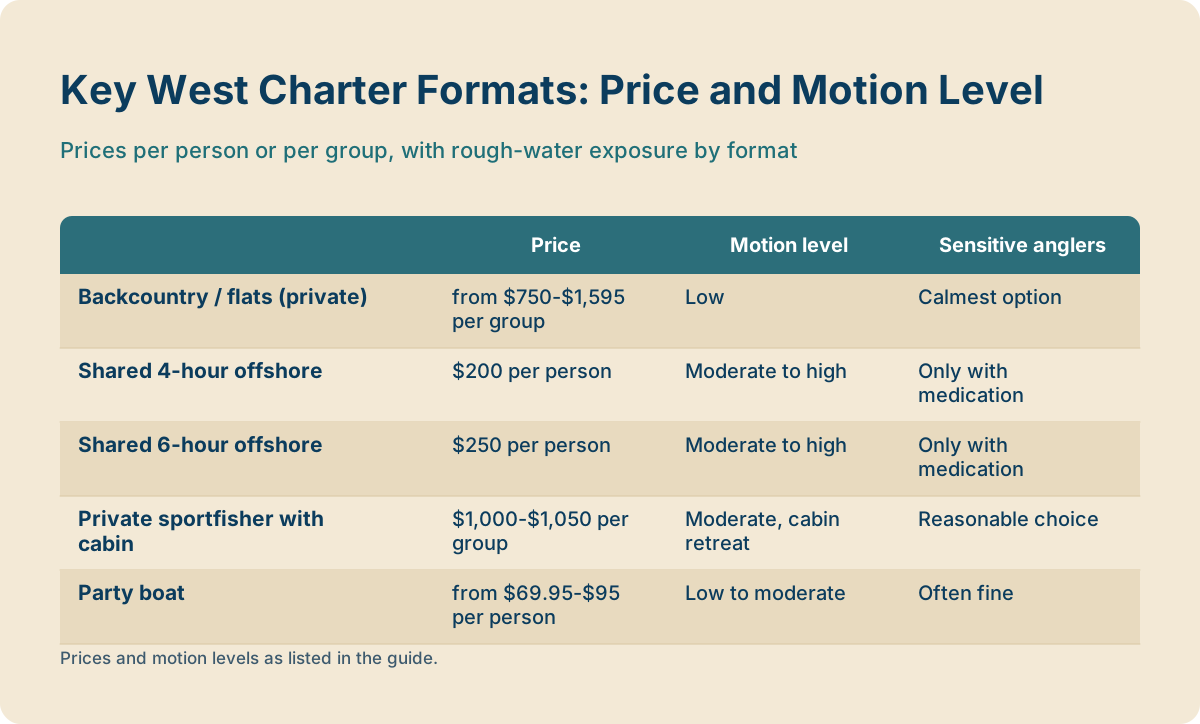
Offshore and deep-sea runs are the roughest Key West formats because they cross open Atlantic swell beyond the reef; the backcountry and flats are the calmest because they fish sheltered water inside the islands. Party boats fall in between, stable from size but long in duration, and a private sportfisher with a cabin, like the 45ft Cowgirl at $1,050 per group, gives you a climate-controlled retreat mid-trip.
Matching the format to your stomach is the single biggest decision, bigger than any medication choice. A traveler who gets sick in open swell can fish the backcountry happily all day, because the water inside the Keys is often glassy in the same wind that stacks up the offshore chop. Conversely, someone who tolerates motion fine but has never tested themselves should not make a 6-hour offshore run their first boat ride in years.
| Charter format | Typical water | Motion level | Best for sensitive anglers |
|---|---|---|---|
| Backcountry / flats (private, from $750-$1,595 per group) | Sheltered bays, 2-8 ft depths | Low | Yes, the calmest option |
| Shared 4-hour offshore, $200 per person | Past the reef, open water | Moderate to high | Only with medication |
| Shared 6-hour offshore, $250 per person | Deeper offshore runs | Moderate to high | Only with medication, longer exposure |
| Private sportfisher with cabin, $1,000-$1,050 per group | Offshore, but 45ft hull | Moderate, cabin retreat | Reasonable choice |
| Party boat, from $69.95-$95 per person | Reef and nearshore | Low to moderate, big hull | Often fine |
Duration matters as much as wave height. The 6-hour shared offshore trip at $250 per person runs two hours longer than the 4-hour version at $200 per person, and those two hours push into deeper water where the swell is longer and the exposure is greater. For a first-time offshore angler genuinely worried about seasickness, the shorter run is the smarter test: if you handle four hours fine, you will know a six-hour trip is realistic next time. Anglers who already know they struggle should look at the private backcountry options instead, where the 4-hour private inshore charter at $750 per group trolls sheltered channels for tarpon, shark and snapper without ever facing the open Atlantic.
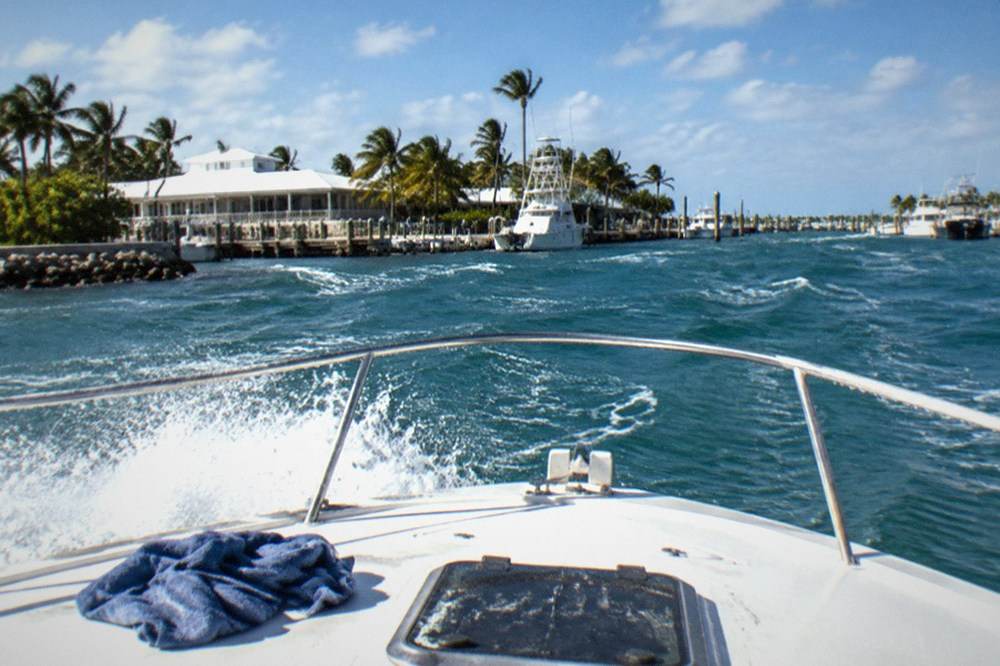
Weather shifts the equation week to week. A calm June morning can make the offshore run feel like a lake; a fresh northeast wind in the same spot can send even experienced anglers to the rail. Check the marine forecast before booking, and if you have flexibility, ask the operator whether morning or afternoon departure is typically calmer for your date. The longer planning view, including which months combine calm water with good bites, is laid out in our Key West fishing season by month guide.
If you are set on offshore fishing despite a nervous stomach, these three formats are where most travelers land, and you can compare them directly:
When Should You Take Seasickness Medication?
Take your first dose the night before the charter and a second dose one hour before boarding, because most oral motion-sickness medication works preventively, not after symptoms start. Once nausea begins, pills may not stay down, so the schedule matters more than the brand: a traveler who medicates at the dock has already missed the window.
The most common mistake on Key West fishing charters is treating seasickness medication like a headache pill, something you take when the problem arrives. Motion sickness does not work that way. Dimenhydrinate and meclizine, the two most common over-the-counter options, need to be in your bloodstream before the vestibular conflict begins, and the standard guidance is a dose the night before, then another about an hour before departure. Travelers who wait until the boat is rocking usually find the medication has nowhere to go.
Prescription options raise the ceiling further. Scopolamine patches applied behind the ear several hours before departure, or the newer dissolvable film formulation, work for many people who get no relief from over-the-counter pills. Some travelers use promethazine, though it tends to cause heavy drowsiness, which is a real trade-off on a trip where you want to feel the bite. Talk to a pharmacist or your doctor about interactions and dosing, especially for children, and test any new medication on land before you trust it on a $1,050 charter day.
| Medication type | When to take it | Notes |
|---|---|---|
| Dimenhydrinate (over the counter) | Night before, then 1 hour before boarding | May cause drowsiness; follow package dosing |
| Meclizine (over the counter) | Night before, then 1 hour before boarding | Less drowsy for many users; chewable forms absorb faster |
| Scopolamine patch (prescription) | Apply several hours before departure | Long-acting; test on land first for side effects |
| Ginger (chews, tea, capsules) | Morning of, and during the trip | Mild evidence for nausea relief; a reasonable add-on, not a replacement |
Non-drug tools have a real place alongside medication. Acupressure wristbands get mixed reviews in studies but cost almost nothing and some anglers swear by them; ginger has modest research support for nausea generally; and simply standing at the helm area, where the boat's motion is most predictable, helps a majority of mildly queasy passengers. None of these replace a proper medication schedule for someone who has been genuinely sick on the water before. For the practicalities of the day itself, from footwear to sunscreen, our what to bring on a Key West fishing charter checklist covers the rest of the bag.
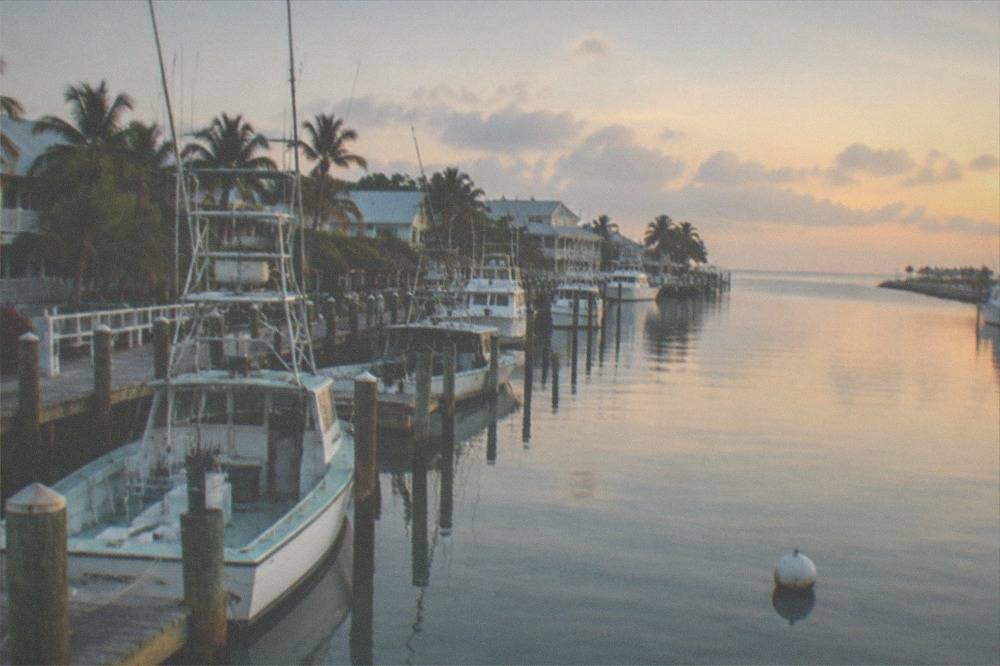
One more scheduling note: book the earliest departure your plans allow. Key West mornings are frequently the calmest part of the day, before the afternoon sea breeze fills in and stacks up the chop. The 6-hour shared offshore trip's early slot is not a coincidence; operators schedule it that way partly for the fishing and partly because the ride out is kinder. If your medication window and the departure time fight each other, set an alarm and take the dose on schedule rather than shaving it to sleep in.
Where Should You Sit On The Boat?
Sit or stand amidships, near the centerline, facing forward, with your eyes on the horizon: that position minimizes the up-and-down pitch your inner ear registers. Avoid the stern and the bow, the two ends of the boat, where vertical movement is greatest, and never stay below deck once you feel symptoms starting.
The physics here is simple. A boat pivots around a point near its middle, so the center of the vessel moves least vertically while the bow and stern swing through the widest arcs. On a 45ft boat like the Cowgirl, the difference between standing at the helm and hanging off the transom is substantial: the same swell produces a gentle rise amidships and a pronounced lurch at the stern. On smaller center-console and bay boats, the effect is compressed but the principle is identical.
Eye position matters as much as body position. Looking at the horizon gives your eyes a stable reference that partially reconciles with what your inner ear is reporting, which is why experienced mates tell queasy passengers to face forward and look out, not down. Every task that locks your gaze close, tying a knot, reading a phone, digging in a tackle bag, makes things worse. If you must do close work, do it in short bursts with horizon breaks in between, and let the mate rig your bait when the swell is up.
On the shared offshore trips, the captain and mate will usually steer sensitive passengers toward the mid-ship seating and the leeward (downwind) side, where spray and wind are reduced. Do not be shy about saying something at the dock; crews would far rather position you well at the start than clean up later. The 4-hour shared offshore trip keeps the group to six travelers, which means there is genuinely room to move around and find the spot that suits your stomach, a real advantage over a packed head boat.
The horizon rule has one exception worth knowing: when a fish is on, look at the fish. The excitement and the focused attention on a moving target at distance are usually enough to override the queasy feedback loop, and anglers who were green five minutes earlier routinely fight a sailfish or mahi without a problem. The sick feeling typically returns during the lull afterward, so plan your recovery position before the next bite: back to mid-ship, eyes up, water in hand.
What Should You Eat And Drink Before And During The Trip?
Eat a light, plain breakfast a couple of hours before boarding, something like toast, banana, oatmeal or eggs, and keep sipping water all day; avoid greasy food, heavy alcohol the night before, and coffee on an empty stomach. On the water, snack dry and simple, crackers, pretzels, bread, rather than skipping food entirely, because an empty stomach can be as bad as a stuffed one.
The old advice to go out on an empty stomach is wrong, and it has ruined more charter days than it prevented. An empty stomach leaves acid sloshing with nothing to absorb it, and low blood sugar amplifies nausea and lightheadedness. The goal is a moderate amount of bland carbohydrate and a bit of protein, eaten early enough to settle before the boat leaves the dock. The classic pre-charter breakfast in the Keys is toast or a banana; the banana part is a sailor superstition on some boats, but the toast part is sound.
| Timing | Do | Avoid |
|---|---|---|
| Night before | Normal dinner, water, early sleep | Heavy alcohol, very late or greasy meals |
| Morning of | Light plain breakfast 1-2 hours before boarding | Skipping food, coffee on empty stomach, fried breakfast |
| During the trip | Small dry snacks, steady water, ginger chews | Rich sandwiches, sugary sodas, alcohol |
| If queasy | Plain crackers, small sips of water or ginger ale | Lying below deck, going without fluids |
Hydration deserves its own sentence or two. Sun, wind and salt dehydrate you faster than you notice, and dehydration worsens both dizziness and nausea, a loop that feeds itself. Bring a water bottle and drink on a schedule, small amounts often, rather than waiting until you feel thirsty. Alcohol is the other side of that coin: a night of Duval Street before a 6-hour offshore run is the most reliable recipe for misery on the water, and the rougher the forecast, the more the previous evening matters.
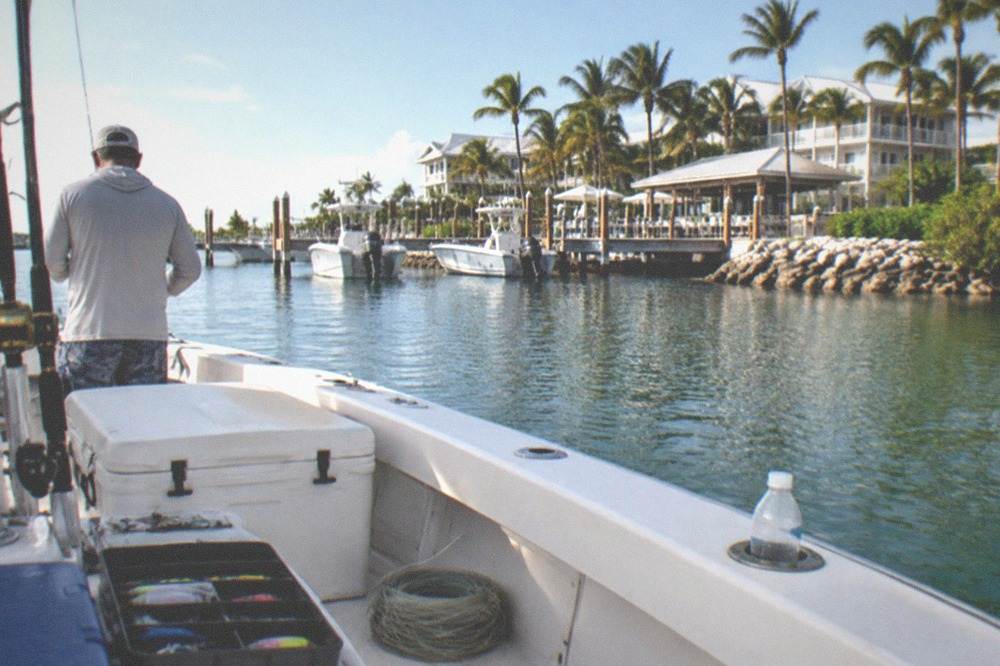
On longer and more comfortable boats, the food question gets easier. The 45ft Cowgirl, a Hatteras that has been running out of Key West since 1965, carries an air-conditioned cabin, which means a table, shade and a place to eat a snack out of the wind and sun; that cabin is a genuine asset for a passenger who needs a ten-minute reset between drifts. The operator's listing includes tackle, permits, bait and a guide, so the practical setup for a queasy-prone group is solid: fish hard amidships, and retreat to the cabin when the stomach says so.
What Should You Do If You Start Feeling Sick Mid-Charter?
Act at the first warning signs, vague unease, extra swallowing, cold sweat, and move immediately: go amidships, face the horizon, get fresh air, sip water or ginger ale, and tell the mate. Once you commit to these steps early, most mild cases stabilize; waiting until vomiting starts usually means a rough remainder of the trip.
The progression of seasickness follows a fairly predictable arc, and the early window is where you can still win. The first signals are subtle: you feel oddly warm, you start swallowing more, food stops sounding appealing. That is the moment to move. Every minute spent "toughing it out" seated in the stern makes the later stages more likely. The mates on Key West charter boats have seen this thousands of times and will not judge you; they will hand you water, move you to a better spot, and keep you facing the horizon (see Key West vs Islamorada).
If vomiting does happen, it is not the end of the day. Rinse, rehydrate slowly, get back on the horizon, and many people find the worst passes and they can fish again, sometimes for hours. Stay above deck, because the enclosed head or cabin, with its close visual field and any fuel or bait smells, is where mild nausea becomes severe. If you are on a private charter, the boat is yours: ask the captain to change drift angle, move to the lee of a key, or shift to the backcountry for the rest of the trip. That flexibility is one of the quiet arguments for private charters over shared runs for sensitive groups, a trade-off we compare fully in private charter versus party boat in Key West.
The 6-hour shared offshore trip deserves a specific note here. Its longer run into deeper water means more total exposure, but it also carries a crew that coaches small groups of six through the whole day, and the same mate who gaffs your tuna is the person who will reposition you when your stomach turns. Travelers who medicated properly, ate sensibly and sat well report that the sixth hour feels no worse than the second; travelers who did none of those things rarely make it to the fifth. Preparation, not duration, is usually what separates the two outcomes.
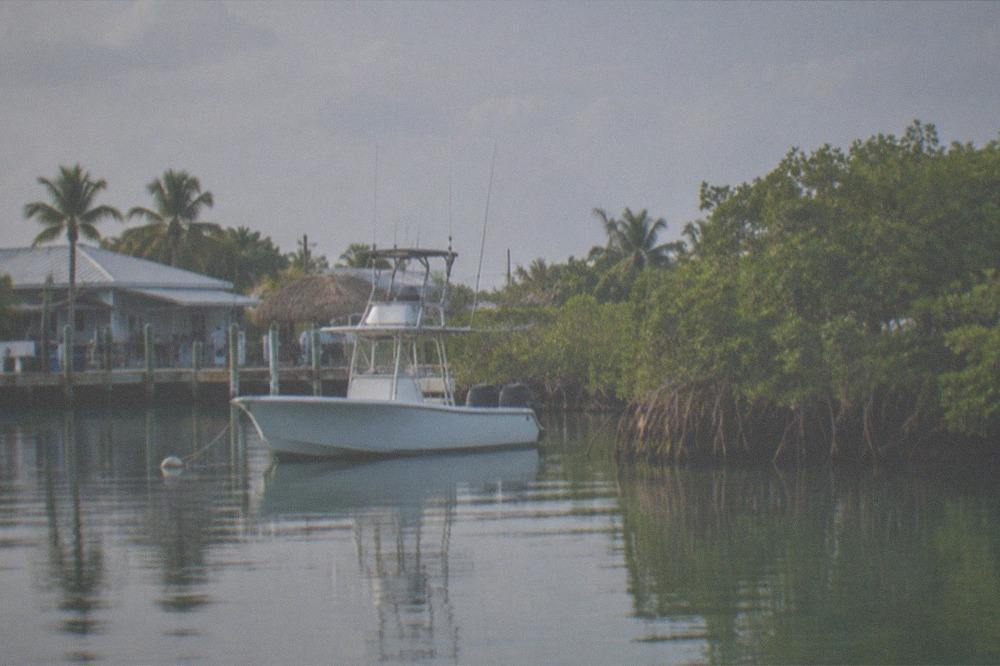
Two practical anchors for the whole topic come from outside the fishing world. The Florida Fish and Wildlife Conservation Commission, which regulates the charter fleet and the fisheries, notes that a licensed captain's for-hire vessel license covers the operation of the trip but does not exempt individual anglers from holding their own recreational saltwater license, with non-resident 3-day licenses at $17; sort that paperwork before the morning so your only onboard worry is your stomach, per the official license page at myfwc.com. And if your trip runs toward the reef or the sanctuary zones, the NOAA sanctuary regulations at floridakeys.noaa.gov explain the yellow-buoy no-take areas your captain will be steering around, useful context for why boats move the way they do out there. For catch-and-release species like tarpon, where fish over 40 inches must stay in the water, the rules live at the FWC tarpon page.
For the full planning picture around trip length, budget and group size, start from Key West Fishing Tours, where the twelve bookable charters are compared side by side, and read our Key West fishing charters compared guide before you commit to a format.
Common Questions About Seasickness On Key West Fishing Charters
Should I Take Seasickness Medication Before A Key West Fishing Charter Even If I Have Never Been Seasick?
If your trip is an offshore or deep-sea format, yes, it is cheap insurance. Take an over-the-counter dose the night before and again an hour before boarding. If you are fishing the backcountry or flats in sheltered water, you can likely skip it, but carry tablets in your bag anyway.
Is The 6-Hour Shared Offshore Trip Rougher Than The 4-Hour Version?
Generally yes, both because it runs two hours longer and because it pushes into deeper water where swell is longer. The 6-hour trip costs $250 per person against $200 for the 4-hour, so if seasickness is a real concern, the shorter run is the lower-risk way to test your sea legs.
Does Eating Before The Boat Trip Make Seasickness Worse?
No, going out hungry can be worse than eating. Have a light, plain breakfast like toast, a banana or oatmeal one to two hours before boarding, and keep dry snacks and water going during the trip. Avoid greasy food and alcohol, which genuinely do make nausea worse.
Where Is The Best Place To Sit On A Fishing Boat To Avoid Seasickness?
Amidships, on the centerline, facing forward, with your eyes on the horizon. The bow and stern move the most vertically, and enclosed spaces below deck make symptoms worse fast. On shared trips, tell the mate early and they will position you well.
Can I Do Anything Once I Already Feel Sick On The Water?
Yes, and speed matters. Move to the middle of the boat, face the horizon, get fresh air, sip water or ginger ale, and eat a few plain crackers. Most mild cases stabilize if you act at the first sign of unease rather than waiting for vomiting to start.
Are Party Boats Better Than Small Charters For Avoiding Seasickness?
Big party-boat hulls, like the 64ft catamaran at $95 per person, are more stable in the same sea state than a small center console, but they fish longer and you cannot ask for a route change. A private charter costs more, from about $750 to $1,595 per group for backcountry trips, but lets the captain move to calmer water if anyone struggles.
If you are ready to book, these are the three formats most worth a look for travelers balancing good fishing against a sensitive stomach: