Backcountry And Flats Fishing In Key West: A Complete Guide
Backcountry and flats fishing is the quiet half of Key West angling: shallow water, mangrove islands, and sight-fishing for tarpon, permit, and bonefish from a private boat.
Short answer
Key West backcountry fishing means fishing the shallow flats, channels, and mangrove islands west and north of the island, mainly from private bay boats and flats skiffs. Target species are tarpon, permit, bonefish, snapper, and shark. Private charters run about 4 hours and cost from $750 to $1,595 per group, with live bait and tackle typically included.
What Is Backcountry And Flats Fishing In Key West?
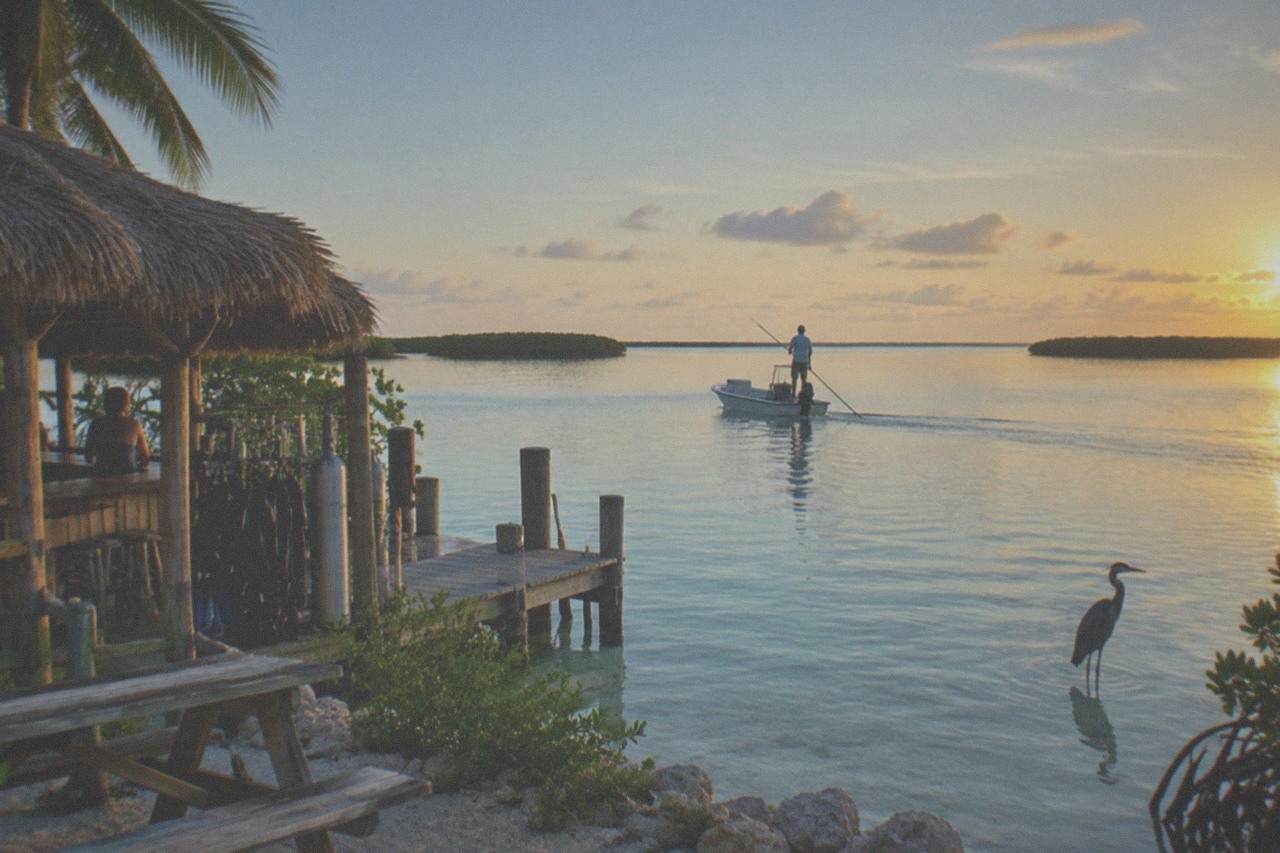
Backcountry and flats fishing in Key West is shallow-water angling in the protected waters that lie north and west of the island, inside the Gulf-side boundary of the Florida Keys National Marine Sanctuary. Rather than heading out to deep offshore water, anglers work these calm, shallow areas, where fish are spotted, stalked, and cast to on the flats and in the surrounding backcountry. It is defined by depth rather than distance: most of this water is two to eight feet deep, threaded with mangrove islands, grass flats, sandy potholes, and channels that hold bait. Charters here run as private trips on bay boats and flats skiffs, typically four hours, and they target tarpon, permit, bonefish, snapper, shark, and barracuda rather than the offshore pelagics. The format is the opposite of a party boat: one small group, one captain, and water thin enough that fish are often seen before they are hooked.
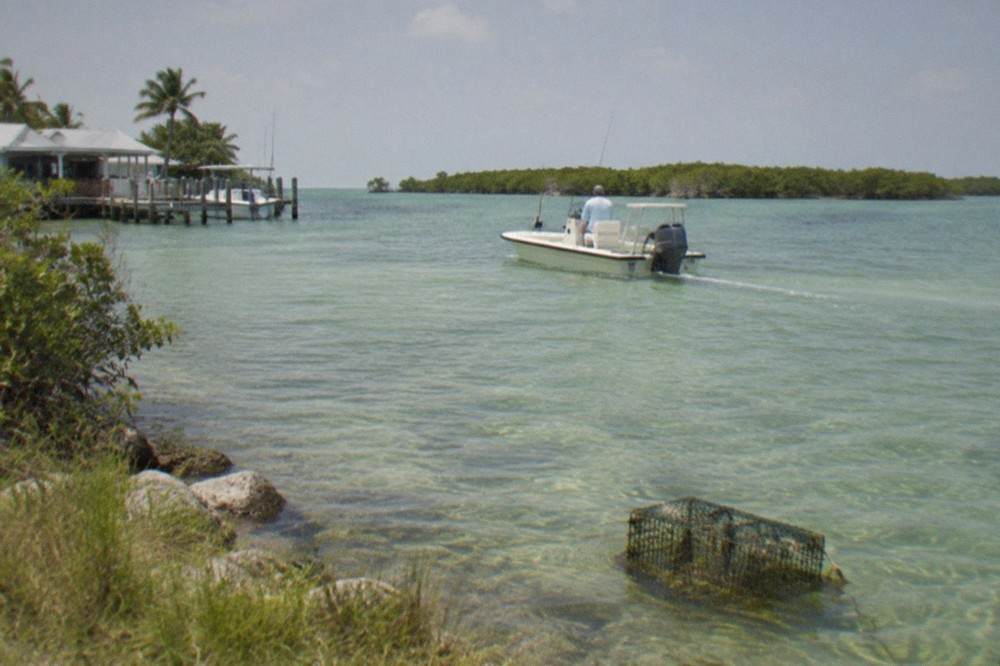
The distinction matters because Key West really has two fisheries. Off the south side of the island, the bottom drops away fast, and deep-sea charters chase mahi-mahi, tuna, and sailfish in blue water. On the Gulf side, the landmass of the Lower Keys breaks into a maze of uninhabited islands, and the water between them stays skinny, warm, and full of life. Locals and captains call that whole area the backcountry. The flats are the shallowest parts of it, the sand and grass panes where bonefish tail and permit cruise, and they are fished by polling or drifting quietly rather than running and gunning.
Because the water is calm and protected, this is the branch of Key West fishing that works for the widest range of people. It is a first-timer's trip as much as a fly-fishing specialist's trip. Families with kids fish the channels for snapper and shark and almost always bend a rod, while serious anglers book the same boats to sight-cast at tarpon and permit in water barely deep enough to float the hull. The Key West Fishing Tours editorial desk covers both ends of that spectrum here, because the same private format serves them.
The roster of backcountry and flats charters bookable out of Key West today is small and genuinely private. Products like the Tarpon Flats Charter out of Ramrod Key, Recon Sportfishing's Half-Day Backcountry Fishing Charter within 13 miles of Key West, and Live Action Sportfishing's Private Bay Boat with live bait included are all four-hour private trips with gear included, though anglers should check the listing on license needs. There is no shared-party version of this fishery on the current market, which is itself a fact worth knowing before you shop.
What Species Can You Target On A Key West Backcountry Charter?
The headline targets are tarpon, permit, and bonefish, the same three species that made the Florida Keys famous, and charters round them out with snapper, shark, barracuda, cobia, and jacks that are far easier to hook on a first trip. Tarpon peak from February through July with the strongest action in April and May, permit run strongest from March through July, and bonefish are present year-round with strong months from March through November. Snapper, shark, and barracuda bite in nearly every month, which is why backcountry boats rarely come back empty-handed even when the glamour fish are sulking.
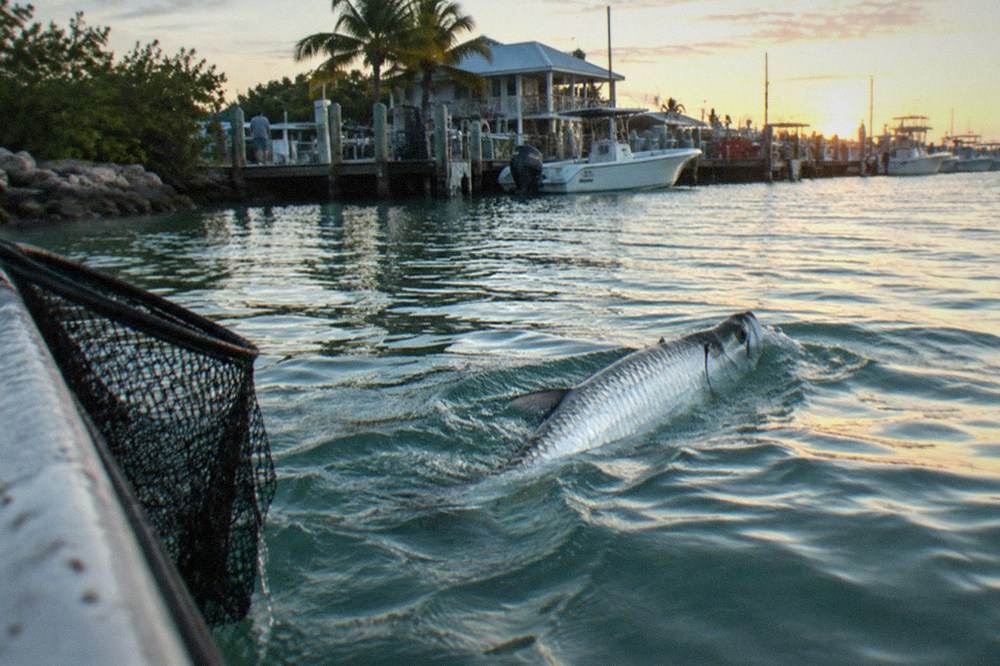
Tarpon are the fish that sells most of these trips. Migratory fish of 100 pounds or more show up in spring, and the shallow channels and basins of the backcountry are where they gather to feed. A 2026 telemetry study found peak adult occupancy in May, as water temperatures reach 79 to 82 degrees Fahrenheit, with median arrivals in mid-to-late April and departures in late May or early June. That window is why April and May dates on flats charters book out first, and why anglers chasing the silver king should plan well ahead. The full species story, including the catch-and-release rules that govern tarpon fishing statewide, is covered in our dedicated guide to tarpon fishing in Key West.
Permit are the connoisseur's fish of the flats, a silver disc that tail feeds on crab beds in water so shallow its dorsal breaks the surface. They are considered one of the hardest saltwater fish to fool on a fly, and the Lower Keys are one of the few places in the world with a real fishery for them. Bonefish complete the backcountry grand slam. They are smaller than the other two, typically a few pounds in the Lower Keys, but they tail on the same flats and run like nothing else their size.
For anglers who want fish for the table rather than a trophy shot, the backcountry delivers snapper, and the regulations are worth knowing before you keep anything. Mutton snapper must measure at least 18 inches total length with a bag limit of 5 per harvester per day, and yellowtail snapper must measure at least 12 inches with 10 per harvester per day, both within a 10-fish snapper aggregate. Those state-water limits come from the current Florida saltwater regulations, and the flats charters on this site that specifically list snapper among their targets include the Half-Day Backcountry Fishing Charter and the Private Inshore Channel Trolling trip.
Here is how the main backcountry targets stack up by season and difficulty:
| Species | Peak months | Difficulty | Keep or release |
|---|---|---|---|
| Tarpon | February to July, strongest April to May | Hard | Catch-and-release only, statewide |
| Permit | March to July, fall window September to November | Very hard | Regulated; check current FWC rules |
| Bonefish | Year-round, strong March to November | Hard | Typically released |
| Mutton snapper | Strong most months | Easy | 18-inch minimum, 5 per person per day |
| Yellowtail snapper | Year-round on reef edges | Easy | 12-inch minimum, 10 per person per day |
| Shark | Year-round in channels | Easy | Release |
The mix is the point. A good backcountry captain reads the water, the wind, and the season, then builds the trip around what is actually biting rather than what the brochure photo showed. Anglers report that a single four-hour trip can reasonably include a tarpon attempt at first light, a drift for snapper over a grass bed, and a shark hookup for the kids on the way home.
How Much Does A Backcountry Fishing Charter Cost In Key West?
Private backcountry and flats charters in Key West generally cost $750 to $1,595 per group for a four-hour trip, and the price buys the whole boat rather than a seat. That per-group pricing means a party of three can fish the flats for roughly $250 to $530 per person, often a better deal than per-seat head boat trips. The Half-Day Backcountry Fishing Charter from Recon Sportfishing runs from $800 per group for up to four anglers, the Private Inshore Channel Trolling trip starts at $750 per group, and the Tarpon Flats Charter out of Ramrod Key starts at $1,595 per group. All three include rods and tackle, with license details on each listing, and the bay boat option from Live Action Sportfishing adds live bait, starting at $800 per group. Compared with offshore and party boat formats, that puts a private flats day within reach of a group of four splitting the cost.
The price spread has logic behind it. The Ramrod Key flats charter sits at the top because it is a specialist product: Mile Marker 27 Fishing Charters fishes depths of two to eight feet for tarpon, bonefish, and permit, the hardest fish in the fishery, from a flats operation that is rated 5.0 across 45 reviews. The general backcountry trips at $750 to $800 are family-priced, targeting tarpon, shark, snapper, and jacks, and they carry bigger review pools, including a 5.0 rating across 72 reviews on the channel trolling trip. What you are paying for at the top end is not more fish but a narrower, harder target.
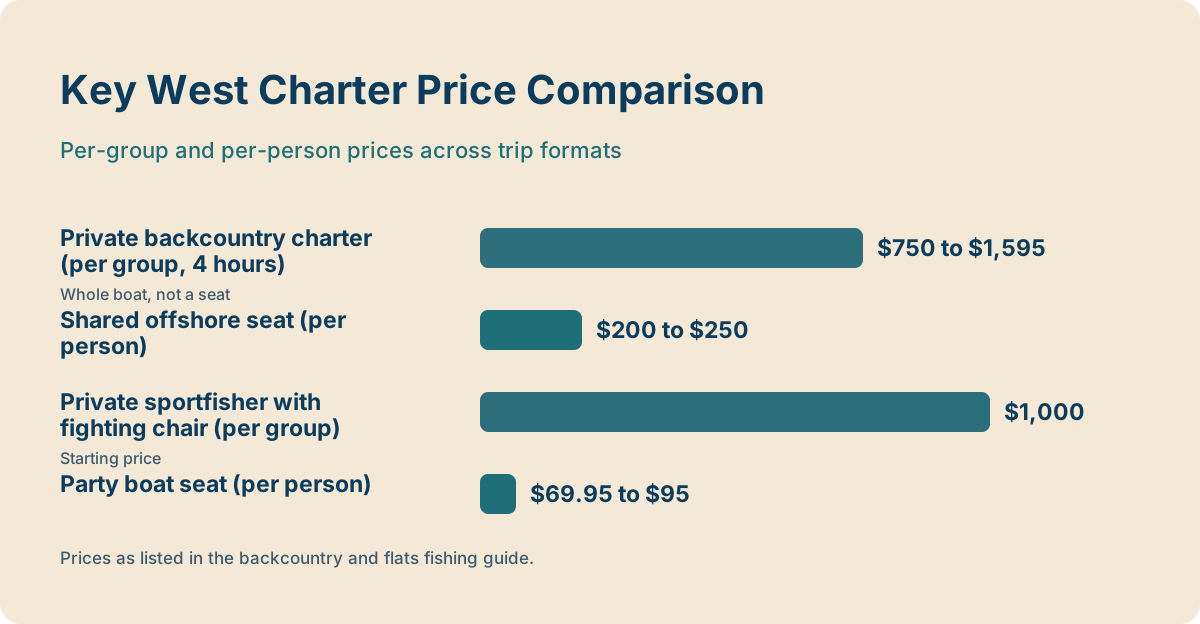
Compared with the rest of the Key West market, backcountry private trips sit in the middle. A shared offshore seat runs from $200 to $250 per person, a private sportfisher with a fighting chair starts at $1,000 per group, and a party boat seat runs from $69.95 to $95 per person. For a group of four splitting an $800 backcountry charter, the math works out to $200 per person, which is exactly the price of a shared offshore seat, except the whole boat, the captain's attention, and the fishery belong to your party alone. The full price landscape across every format is laid out in our guide to how much a Key West fishing charter costs.
One cost that is not in the charter price is your own fishing license. A licensed captain's for-hire vessel license covers the operation of the trip, but it does not exempt individual anglers from holding their own recreational saltwater license. Non-resident licenses run $17 for three days, $30 for seven days, or $47 for the year, and they can be bought online in minutes. The details and exemptions are in our guide to Key West fishing license requirements, and the official fee schedule lives on the FWC licensing page at myfwc.com.
What Techniques Do Guides Use In Shallow Water?
Backcountry guides rely on live bait, cut bait, and artificial lures, but their core skill is presentation in water so shallow that a wrong turn of the boat can spook the fish, so they carefully control boat position, casting angles, and lure or bait movement to keep fish calm and get them to strike. Tarpon trips often anchor or drift live crabs, pilchards, or mullet at the edge of a channel and wait for a school to roll through. Permit fishing means casting small crabs or shrimp to fish spotted tailing on the flats, and bonefish call for the lightest tackle on the boat. Snapper and shark trips are simpler: chum a channel edge, drop bait, and let the kids reel. Every one of these methods depends on the captain reading water that is only a few feet deep.
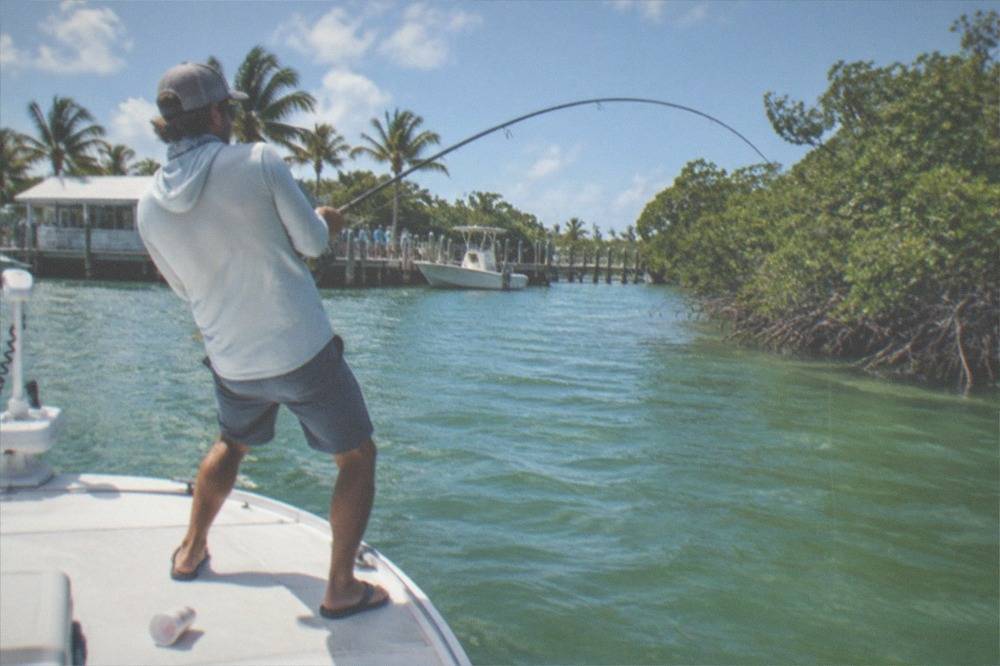
Sight-fishing is the technique that separates the flats from everywhere else. In water two to eight feet deep and often clear enough to see the bottom, the captain stands on a platform and pushes the boat with a push pole rather than running the engine, because a motor's shadow and noise clear a flat in seconds. Anglers then cast to fish they can actually see: a tarpon rolling on the surface, a permit tailing on a crab bed, a bonefish ghosting across white sand. Fly anglers chase all three this way, and the Lower Keys host invitation-only permit fly tournaments, including the March Merkin and the IGFA Permit Invitational, that draw specialists from around the world.
Trolling the backcountry channels is the other common method, and it is what the Private Inshore Channel Trolling charter is built around. The boat moves slowly along the edges of channels where tarpon, shark, and snapper patrol, pulling live or dead baits at idle speed. It demands less casting skill than sight-fishing, which makes it the right technique for first-timers and families, and anglers on that trip rate it 5.0 across 72 reviews. Live Action Sportfishing's Private Bay Boat trip takes the live-bait approach further, with bait caught and carried in a live well so that tarpon, permit, cobia, and shark are fed exactly what they are eating that day.
The technique table below matches each method to the fish it best serves:
| Technique | Main targets | Skill needed | Best for |
|---|---|---|---|
| Live bait on anchor or drift | Tarpon, cobia, shark | Low to medium | Families, first trips |
| Sight-casting on the flats | Permit, bonefish, tarpon | High | Experienced anglers, fly fishers |
| Channel trolling | Tarpon, shark, snapper | Low | Beginners, mixed groups |
| Chumming channel edges | Snapper, jacks, barracuda | Low | Kids, table-fish goals |
| Fly fishing | Bonefish, permit, tarpon | Very high | Specialists |
Weather shapes technique more than most visitors expect. Wind is the flats fisherman's enemy because it ripples the surface and hides the fish, so calm mornings are gold and captains launch early to use them. Cold fronts in winter push tarpon and permit into deeper basins, and guides respond by fishing channels rather than open flats. A good captain will tell you honestly on the morning of the trip what the water looks like and adjust the plan, which is one of the built-in advantages of a private charter over a fixed-itinerary group trip.
Why Is Backcountry Fishing A Private-Boat Format?
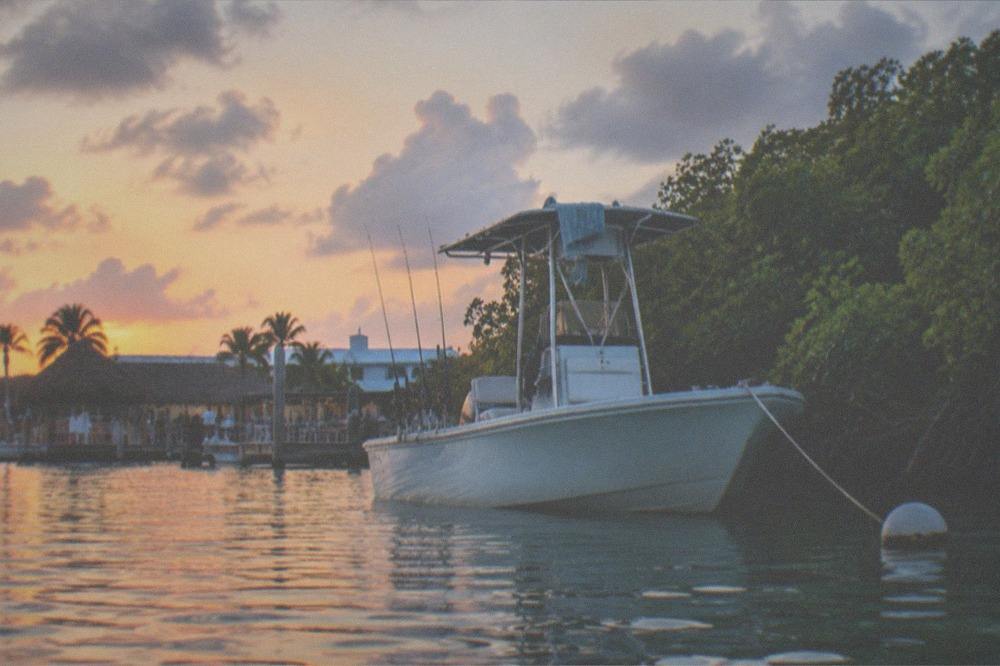
Backcountry fishing works only as a private charter in Key West because the whole format depends on exclusivity and space: the shallow flats and mangrove channels require a single light-draft skiff with one captain poling quietly for one small group, since extra anglers, shared boats, or crowded decks would spook the fish, overload the draft, and defeat the sight-fishing approach entirely. Flats skiffs and bay boats carry two to four anglers, draft only inches of water, and work best quiet: poling, drifting, or idling along channel edges. There is no shared-seat product on the market for this fishery, and none is likely, because a flats trip built around sight-casting cannot absorb strangers into one plan. Every backcountry product on this site's roster is a private, per-group booking, and the price you see is the price for the whole boat.
The economics follow the format. Party boats work by spreading a fixed cost across 45 passengers, which is why a seat runs under $100, but a party boat draws several feet of water and cannot get near a flat. Backcountry boats are small, specialized, and priced by the hull. That is also why the format suits mixed groups so well: the itinerary flexes. A private captain can spend the first hour hunting tarpon for the serious angler and the last two hours chumming snapper for the kids, something no shared trip can do. The trade-offs between the two worlds are compared in detail in our guide to private charter versus party boat fishing in Key West.
The private format also changes what is included. Across the backcountry roster, tackle and bait are standard inclusions; check the listing about license details, and the Half-Day Backcountry Fishing Charter adds coolers, so a group genuinely shows up with nothing but food, drink, and sun protection. The Recon Sportfishing trip fishes within 13 miles of Key West and is rated 5.0 across 19 reviews, priced from $800 per group for up to four anglers. What to pack for a day like this is covered in our what to bring on a Key West fishing charter guide.
One more honest note on the format: private means the quality of your day rides heavily on your captain. The roster's ratings are one signal, and the backcountry products on this site all review well, but the right questions to ask before booking are where the captain plans to fish given the forecast, what species are realistically in season, and what happens if weather cancels the trip. Operators who answer those three plainly are the ones worth booking.
What Regulations Apply To Backcountry And Flats Fishing?
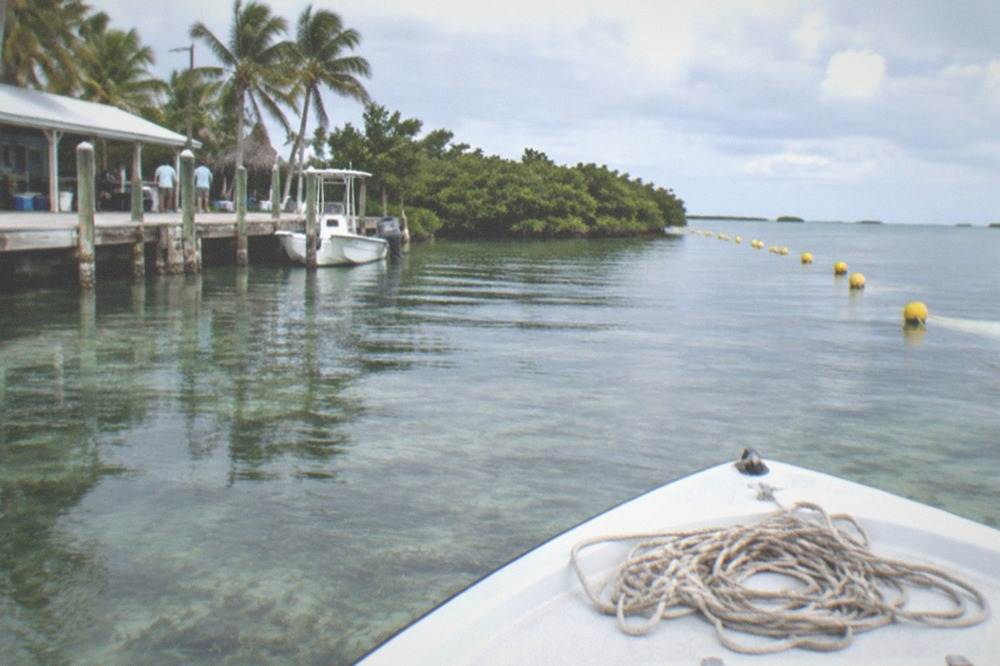
Tarpon fishing is catch-and-release only statewide, and any tarpon over 40 inches must remain in the water during release. The backcountry also lies within the Florida Keys National Marine Sanctuary, where several zones prohibit all fishing, so anglers should check zone boundaries before casting. Anglers also need their own saltwater license even on a licensed charter, non-resident three-day licenses cost $17, and snapper and grouper limits follow state aggregate rules. Sanctuary Preservation Areas and Ecological Reserves, marked with yellow buoys, are closed to taking marine life of any kind, and captains are responsible for keeping charters outside them. The rules come from FWC state regulations and the sanctuary's own zoning map, and both can change.
The tarpon rule is the one every flats angler should know cold. Tarpon may not be harvested anywhere in Florida state or federal waters, hook-and-line is the only legal gear, and a fish longer than 40 inches may not be lifted out of the water for a photo. A tarpon tag, roughly $50 and limited to one per person per year, exists only for anglers pursuing a state or world record. The full rule text is on the FWC tarpon page at myfwc.com.
The sanctuary overlay is the fact most visitors have never heard of, and it is the reason a backcountry captain's local knowledge matters. The January 2025 Restoration Blueprint expanded the sanctuary boundary and added zones, including a new Turtle Rocks Sanctuary Preservation Area, and some anchoring restrictions phase in through 2027. Zone boundaries are actively being updated, so the official source is the sanctuary regulations page at floridakeys.noaa.gov. Our blog post on Florida Keys National Marine Sanctuary fishing rules covers what changed and what it means for anglers.
The key limits for backcountry table fish:
| Species | Size minimum | Daily bag limit | Notes |
|---|---|---|---|
| Mutton snapper | 18 inches | 5 per harvester | Within 10-fish snapper aggregate |
| Yellowtail snapper | 12 inches | 10 per harvester | Within same aggregate |
| Grouper | 20 to 24 inches by species | 3-fish aggregate, Atlantic rules | Seasons shift by executive order, check MyFWC.com |
| Tarpon | No minimum | Zero harvest | Release only, 40-inch fish stay in the water |
| Mahi-mahi (if run offshore) | 20 inches fork length, Atlantic | 5 per harvester | Vessel cap of 30 does not apply to for-hire boats |
Grouper deserve a specific caution: seasons open and close by executive order, so never treat a printed season window as fixed. The right move is to check the current open season on MyFWC.com before booking a trip where keeping grouper matters to you. Charter captain and crew typically carry a zero bag limit on for-hire vessels, so the fish you keep are the ones you personally land within your own limits.
When Is The Best Season For Key West Backcountry Fishing?
Key West backcountry fishing runs all year, but the season that defines the fishery is tarpon season, which stretches from February through July and peaks in April and May. If you want the best overall experience, plan your trip for spring, when tarpon, permit, and bonefish are all available at once and anglers get the strongest mix of the three major species the backcountry is known for. April and May bring migratory tarpon flooding the shallows, permit spawning runs start in late March, and bonefish stay active from March through November. Winter is the slow season for the glamour fish but still produces snapper, shark, and jack, and cold fronts can shut the flats down for days at a stretch. Anglers who can only travel in one season should aim for spring if the big three matter to them.
The month-by-month picture, including what offshore anglers can expect in the same periods, is laid out in our Key West fishing season by month guide. For backcountry specifically, the practical planning advice is this: book April and May trips early, because that is when flats charters fill and when the tarpon fishing is at its best, and treat summer as a strong second choice, when early morning launches beat the heat and the fish are still around. Fall is the sleeper window, with permit active again from September through November and thinner crowds on the water.
Tournament traffic is a real scheduling factor for serious anglers. The March Merkin Permit Tournament runs March 9 to 12, 2026, the Key West Sailfish Tournament runs March 26 to 28, and the IGFA Permit Invitational lands September 29 to October 2 in the Lower Keys. Those events pull specialist anglers into the same flats, which means marina traffic and top guides get booked around them, but they also signal exactly when the fishing is peaking.
How To Choose The Right Backcountry Charter
Choose a backcountry charter by first matching the boat to your targets: specialist flats trips for tarpon, permit, and bonefish, and general bay boat trips for families who want action and fish to take home. Then weigh the guide's local knowledge, the trip length and price, and what gear or licenses are included before you book. The Tarpon Flats Charter out of Ramrod Key at $1,595 per group is the specialist play, rated 5.0 across 45 reviews. The general private trips cluster at $750 to $800 per group: Recon's Half-Day Backcountry charter at 5.0 across 19 reviews, Live Action's Private Bay Boat with live bait at 5.0 across 14 reviews, and the Private Inshore Channel Trolling trip at 5.0 across 72 reviews. Every one of them is a four-hour private trip with tackle and license coverage included.
Group size is the first filter. The Recon and Live Action trips take up to four anglers, which fits most families, and the channel trolling trip is likewise a small-group private product. Skill level is the second. If anyone in your party has never cast a rod, tell the operator at booking and lean toward the live-bait and chumming trips, where the captain can hand a rod to a beginner the moment a fish is on. If your goal is a tarpon on fly or a permit on bait, say so in the same message, because those trips demand the specialist end of the roster and often an earlier start.
The decision table:
| If you want... | Best fit | Price | Rating |
|---|---|---|---|
| A shot at tarpon, permit, and bonefish | Tarpon Flats Charter, Ramrod Key | From $1,595 per group | 5.0 from 45 reviews |
| Family action plus table fish | Half-Day Backcountry Fishing Charter | From $800 per group, up to 4 | 5.0 from 19 reviews |
| Live bait and varied targets | Private Bay Boat, Live Bait Included | From $800 per group | 5.0 from 14 reviews |
| Easy fishing for beginners | Private Inshore, Channel Trolling | From $750 per group | 5.0 from 72 reviews |
Ask three questions before you book any of them: where will we fish given the forecast, what is realistically in season, and what is the cancellation policy if weather turns. Operators who answer those plainly, in writing, are the ones who will run an honest trip. Every backcountry product on this site can be checked for live dates and current pricing through the operator's listing, with no payment needed to see availability.
Common Questions About Key West Backcountry Fishing
What Is The Difference Between Backcountry And Flats Fishing In Key West?
Backcountry is the broader term for all the protected shallow water north and west of Key West, including channels, basins, and mangrove islands. The flats are the shallowest sand and grass areas within the backcountry where fish like bonefish and permit tail and are sight-fished. Most charters do both in one trip, moving between flats and channels as the fish and wind dictate.
What Species Can You Catch Backcountry Fishing In Key West?
Tarpon, permit, and bonefish are the headline targets, with snapper, shark, barracuda, cobia, and jacks filling out the catch. Tarpon peak February through July, permit run strongest March through July, and bonefish are present year-round. Snapper and shark bite in nearly every month, which keeps action consistent for beginners.
How Much Does A Backcountry Fishing Charter In Key West Cost?
Private backcountry charters cost from $750 to $800 per group for general trips and from $1,595 per group for the specialist tarpon flats charter out of Ramrod Key. All are four-hour private trips that include tackle, bait, and license coverage for the trip. Your own personal saltwater license is a separate requirement, from $17 for a three-day non-resident license.
Do I Need A Fishing License For A Backcountry Charter In Key West?
Yes. A licensed captain's for-hire vessel license covers the operation of the trip but does not exempt individual anglers from holding their own recreational saltwater license. Non-resident licenses cost $17 for three days, $30 for seven days, or $47 annually and can be purchased online through MyFWC.com.
Is Backcountry Fishing Good For Beginners And Kids?
It is one of the best formats in Key West for them. The water is calm and protected, the general trips target snapper, shark, and jacks that bite reliably, and a private captain can tailor the day to the group's skill. Sight-fishing for permit and bonefish is expert-level fishing, but that is one technique on the boat, not the whole trip.
When Is Tarpon Season In The Key West Backcountry?
Tarpon season runs February through July with the strongest action in April and May, when migratory fish over 100 pounds move into the shallows. A 2026 telemetry study found peak adult occupancy in May, with arrivals in mid-to-late April. Tarpon are catch-and-release only statewide, and fish over 40 inches must stay in the water.