Key West Fishing License Requirements For Charter Trips
The single most misunderstood rule in Key West charter fishing: a captain's license covers the boat, not the anglers on it. Here is the real fee schedule, who is exempt, and how the rules apply to every format of charter sold in Key West today.
Short answer
Every angler on a Key West charter needs a personal Florida saltwater fishing license unless they qualify for an exemption. A non-resident 3-day license costs $17, a 7-day costs $30, and an annual costs $47. A captain's for-hire vessel license covers the operation of the trip but does not exempt individual guests.
Booking a fishing charter in Key West feels like handing every logistical problem to the captain: the boat, the tackle, the bait, the local knowledge. One thing it does not hand over is your fishing license. Florida law is unusually clear on this point, and it is the rule that catches the most visitors off guard. A licensed captain's for-hire vessel license covers the operation of the trip, but it does not exempt the individual anglers on board. Every person who drops a line needs their own recreational saltwater license unless they fall into a specific exemption category. This guide lays out the real fee schedule straight from the Florida Fish and Wildlife Conservation Commission, the exemption list, and how the rule plays out across the actual charter formats sold in Key West today, from the $69.95 party boat to the $1,595 private flats trip.
Who Needs A Florida Saltwater Fishing License On A Key West Charter?
Every angler aboard a Key West charter needs a personal Florida saltwater fishing license to take or attempt to take saltwater species, regardless of whether the fish are caught in state or federal waters, and regardless of whether the boat is run by a licensed captain. The captain's for-hire vessel license covers the operation of the trip only. Guests who qualify for an exemption, mainly by age or disability status, are the exception.
The requirement is not about where you fish. It is about what you land. Florida requires the license to take or attempt to take saltwater species anywhere in Florida waters, and the rule follows the angler, not the vessel. That means the same license covers you whether you are trolling the reef three miles out or casting to tarpon in two feet of water off Ramrod Key. The distinction between state waters, generally three nautical miles on the Atlantic side and nine on the Gulf side of the Keys, matters for bag limits and species rules, not for whether you need the license itself.
The part that trips people up is the charter exemption that does not exist. Many visitors assume that handing over $800 for a private charter, or $95 for a seat on the shared 64ft catamaran, buys them licensed status for the day. It does not. The operator's for-hire license is what makes the trip itself legal to sell and run. The anglers on board are separate legal actors in the eyes of the state, and each one needs personal coverage. The official license page at MyFWC.com spells this out, and it is worth reading before you assume anything.
There are real exemptions, and they matter for family planning. Anglers under 16 do not need a license. Florida residents of qualifying senior age do not, though they should carry proof of residency and age. Certain disability categories qualify, as do a few military and assisted-care situations. Everyone else, including every non-resident adult on every charter in this site's roster, needs to buy one before the first cast.
What Does A Florida Saltwater Fishing License Cost?
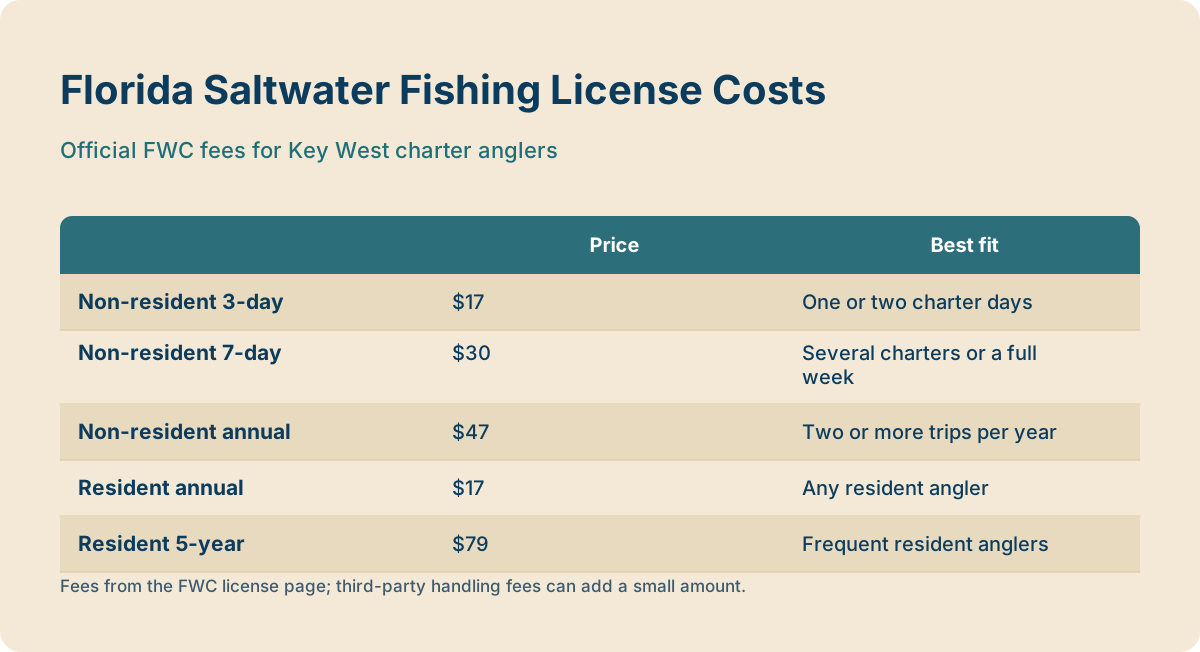
Non-resident visitors pay $17 for a 3-day saltwater license, $30 for a 7-day license, or $47 for an annual license. Florida residents pay $17 for an annual license or $79 for a 5-year license. These are the official fees from the FWC license page, and they include administrative fees, though handling fees on third-party purchase channels can add a small amount.
For most visitors on a short fishing trip, the math is simple. The 3-day license at $17 covers a long weekend of fishing, and the 7-day at $30 covers a full week. There is no single-day option for non-residents, so a one-off half-day charter still requires the 3-day license at minimum. The annual at $47 only makes sense if you will fish Florida twice in a year or stay longer than a couple of weeks.
| License type | Who it is for | Price | Best fit for a Key West trip |
|---|---|---|---|
| Non-resident 3-day | Visitors fishing a weekend | $17 | One or two charter days |
| Non-resident 7-day | Visitors on a week-long trip | $30 | Several charters or a full week |
| Non-resident annual | Repeat visitors | $47 | Two or more trips per year |
| Resident annual | Florida residents | $17 | Any resident angler |
| Resident 5-year | Florida residents | $79 | Frequent resident anglers |
Note the trap in that table: there is no per-trip or per-charter license. A family of four adults booking the private inshore charter, the one rated 5.0 across 72 reviews from $750 per group, needs four licenses on top of the charter price, each at the 3-day rate. It is not a budget breaker, but it is a real line item that first-time bookers rarely see coming, and it applies identically whether the charter costs $200 per person or $1,595 per group.
The purchase itself takes about five minutes online through the official FWC portal, and the confirmation can live on your phone. Charter crews in Key West are used to guests showing the digital confirmation on the dock. A few operators mention licenses in their listing details, and some will remind you the day before, but the legal burden sits with you, not them.
Does Booking A Charter Cover Your License?
No. A licensed captain's for-hire vessel license covers the operation of the charter, not the individual anglers on it, and this is the single most misunderstood rule in Key West fishing. Guests on any charter, private or shared, still need their own recreational saltwater license unless they qualify for a specific exemption such as being under 16 or a Florida resident of qualifying senior age.
The confusion is understandable, because the phrasing on many charter listings is genuinely ambiguous. When a listing says "license included," some operators mean the captain's for-hire license that makes the trip legal, and guests reasonably read that as "you are covered." The two things are legally distinct. The captain's license is a business credential. Your license is a personal one, tied to you as a harvester, and the state's position is that a for-hire vessel license does not exempt individual guests.
This applies across every format in the current Key West roster. The shared catamaran party boat, rated 4.5 across 505 reviews from $95 per person, includes license in its listing copy, and the 6-hour party boat from Gulfstream Fishing, from $69.95 per adult, also lists license as included. What that means in practice is the vessel-side coverage. Reading the fine print, the individual angler requirement still stands under state law, so the safe move is to buy the $17 non-resident 3-day license regardless of what the listing says.
Private charters are no different. The 24ft Pathfinder bay boat run by Live Action Sportfishing, from $800 per group, includes rods, tackle, live bait and license in its description, and the Mile Marker 27 flats operation at $1,595 per group lists license among its inclusions. These are honest descriptions of what the operator carries. They are not a substitute for the personal license FWC requires of each angler, and enforcement does not accept "the listing said license included" as a defense.
How Do You Buy A License Before Your Charter?
Buy online through the official FWC license portal, through the Fish Rules app, or in person at a Florida tax collector's office or licensed vendor. The online purchase takes about five minutes, you print or screenshot the confirmation, and there is no photo, test or course required for a basic recreational saltwater license. Non-residents need only their payment details and basic personal information.
The online route is the one nearly everyone uses now. Go to the FWC recreational saltwater license page, pick the non-resident 3-day, 7-day or annual option, pay, and the confirmation is valid immediately. You do not need to be in Florida to buy it, so the sensible move is to sort it a day or two before you fly, not on the dock at 7 a.m. while the captain waits. The license is digital-first: the confirmation email or the Go Outdoors Florida app display satisfies enforcement, and screenshotting it as a backup costs nothing.
Two add-on permits exist, and only one is remotely relevant to charter fishing. A snook permit and a spiny lobster permit are separate purchases, required only if you target those species. None of the charters in this site's roster sells snook or lobster trips, so for a standard Key West charter targeting tarpon, snapper, mahi or grouper, the base saltwater license is all you need.
Timing matters more than people expect. Licenses are valid for the period purchased, not the calendar days you fish, so a 3-day license bought Monday covers Monday through Wednesday. If your charter is Friday and you bought the license the previous Saturday, you may have burned it. Buy close to your fishing date, not the day you book the charter, especially for short windows.
Which Key West Charter Formats Handle Licenses Best?
All 12 verified charters in this site's roster are run by licensed captains whose for-hire licenses cover the trip's operation, and several list license among their inclusions, but none of those inclusions replaces the personal license each adult angler must carry. The practical difference between formats is how much the crew reminds you, not whether the rule applies.
Private charters tend to be the most proactive, because a captain with four guests has a direct conversation before departure. Shared and party boat formats, with up to 45 travelers on the Gulfstream 6-hour trip, rely more on the booking confirmation and dock signage to communicate the rule, which is exactly how guests slip through unlicensed. Here is how the main formats stack up on what the listing actually includes. More of these guides are collected on Key West Fishing Tours.
| Charter | Format | Price from | Rating and reviews | License in listing |
|---|---|---|---|---|
| Private Bay Boat, Live Bait Included | Private inshore | $800 per group | 5.0, 14 reviews | Yes, listed |
| Private Inshore, Channel Trolling | Private inshore | $750 per group | 5.0, 72 reviews | Yes, listed |
| Tarpon Flats Charter, Ramrod Key | Private flats | $1,595 per group | 5.0, 45 reviews | Yes, listed |
| 4-Hour Shared Offshore, Max 6 | Shared offshore | $200 per person | 4.0, 32 reviews | Not stated |
| Private Sportfisher, Fighting Chair | Private offshore | $1,000 per group | 4.8, 114 reviews | Not stated |
| Shared Catamaran, Filleting Included | Party boat | $95 per person | 4.5, 505 reviews | Yes, listed |
| 6-Hour Party Boat, Day or Night | Party boat | $69.95 per adult | 335 reviews | Yes, listed |
Read that table with the earlier section in mind. "Yes, listed" means the operator advertises license coverage, which in every case refers to the vessel-side for-hire license and any blanket permits the operator carries. It is a good sign about the operator's professionalism. It is not a legal exemption for you. For a fuller comparison of what each format costs all-in, the guide on how much a Key West fishing charter costs breaks down the total spend including licenses and gratuities.
The private inshore charter trolling backcountry channels, rated 5.0 across 72 reviews from $750 per group, is a good example of the pattern. Its listing is explicit that tackle and license are provided, and its captains are explicit at the dock that each adult still needs personal coverage. That two-layer honesty is common among the better-reviewed operators in Key West, and it is one reason review pools for the private formats run so strong (see Key West vs Islamorada).
What Rules Apply Beyond The License?
A saltwater license is the entry ticket, not the whole rulebook. Tarpon are catch-and-release only statewide, fish over 40 inches must stay in the water, mutton snapper carry an 18-inch minimum and a 5-fish daily limit, and the Florida Keys National Marine Sanctuary imposes no-take zones that charters must respect in addition to state and federal fishing rules.
The species rules matter most for what you can keep. Tarpon fishing, which several backcountry charters in Key West specialize in, is a strict catch-and-release fishery in both state and federal waters. Fish over 40 inches may not be removed from the water at all, and a tarpon tag, roughly $50 and limited to one per person per year, is only needed if you are pursuing a state or world record. The details live on the official FWC tarpon page.
Snapper rules shape what goes in the cooler. Mutton snapper need 18 inches and are capped at 5 per harvester per day within a 10-fish snapper aggregate; yellowtail need 12 inches with the same aggregate cap. Grouper are the moving target: the Atlantic-side aggregate is 3 fish per harvester, but open seasons shift by executive order, so check the current open season on MyFWC.com before booking rather than trusting any fixed date range. Mahi-mahi on the Atlantic side need a 20-inch fork length with 5 per harvester per day, and captain and crew carry a zero bag limit, which is why the mate never fills your slot.
| Species | Minimum size | Daily bag limit | Notes for charter anglers |
|---|---|---|---|
| Tarpon | None | Catch-and-release only | Over 40" stays in the water; tag only for record pursuit |
| Mutton snapper | 18" total length | 5 per harvester | Within 10-fish snapper aggregate |
| Yellowtail snapper | 12" total length | 10 per harvester | Within the same aggregate |
| Grouper (aggregate) | 20-24" by species | 3 per harvester, Atlantic side | Seasons shift by executive order; verify before the trip |
| Mahi-mahi | 20" fork length | 5 per harvester | Vessel cap of 30 does not apply to for-hire boats |
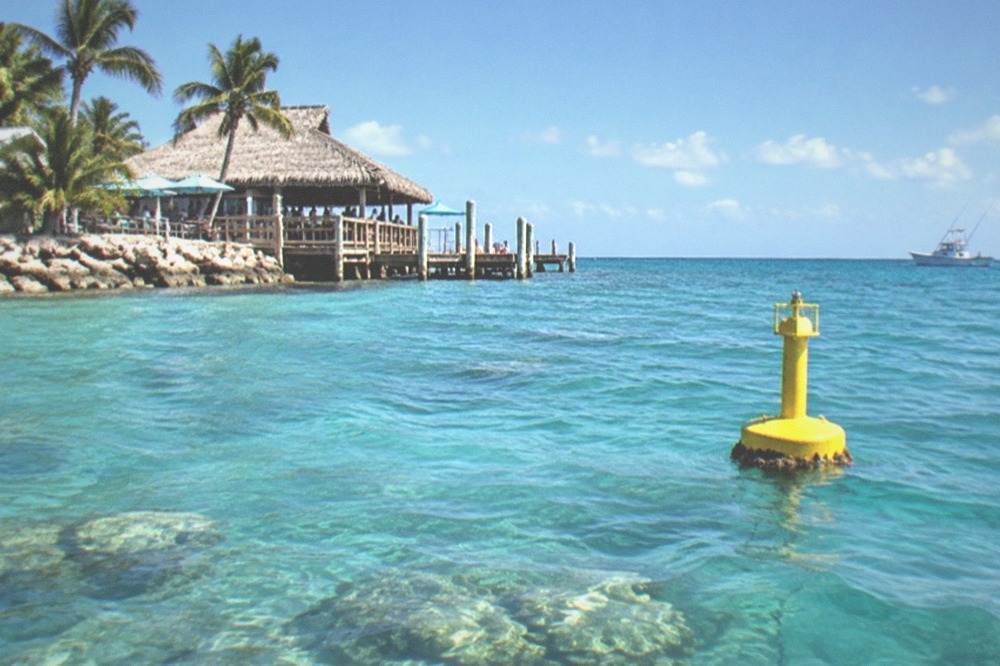
The other layer is spatial. The Florida Keys National Marine Sanctuary overlays a network of Sanctuary Preservation Areas and Ecological Reserves where fishing by any means is prohibited, generally marked with yellow buoys. The January 2025 Restoration Blueprint rule expanded the sanctuary boundary and adjusted several zones, and some anchoring restrictions phase in through 2027, so boundaries are genuinely in flux. Your captain knows these zones cold, and the shared catamaran and offshore charters route around them daily. Guests do not need to memorize the map, but knowing it exists explains why a boat sometimes motors past an obviously fishy spot. The official zoning detail is at floridakeys.noaa.gov, and there is a deeper dive in the site's piece on sanctuary fishing rules in the Keys.
What Happens If You Fish Without A License In Key West?
Fishing without a required license is a noncriminal infraction in Florida, typically handled with a fine plus court costs that usually exceed the price of the license many times over, and enforcement in the Keys is active, with officers checking boats on the water and at the dock. The cheap insurance is the $17 non-resident 3-day license.
The fine structure is the part worth internalizing. A missing license costs more in penalties than the license itself would have cost for years of coverage, and officers in Monroe County do check, particularly around the busy party boat docks and the marinas on Stock Island. Guests on shared trips are the most exposed, because a single unlicensed angler on a boat with 45 travelers is a routine find. On private charters the captain usually catches it first, which is one quiet advantage of paying for a private format.
There is also a fairness argument that is simply practical: the license fees fund fisheries management in the state you are visiting. The artificial reef programs, the snapper stock assessments and the tarpon research that keep Key West fishing world-class are paid for substantially by license revenue. The 3-day license is $17, less than the tip on most half-day charters, and the guidance on tipping your Key West captain and crew puts that number in context.
If you realize on the dock that you forgot, the fix is fast. The online purchase works from your phone in minutes, and the confirmation is valid the moment payment clears. There is no reason to fish unlicensed in Key West in 2026, and every reason, legal and financial, to spend the seventeen dollars.
How Do License Rules Affect Families And Groups?
Children under 16 fish license-free in Florida, Florida residents of qualifying senior age are exempt with proof of age and residency, and certain disability categories qualify for exemptions, which means a typical visiting family usually needs licenses only for the adults. A group of adults on a private charter should budget one 3-day license per angler on top of the charter price.
The family math is friendlier than most guides admit. Two adults and two kids on the shared catamaran, from $95 per person with kids around $42.95 on the 6-hour party boat format, pay for two licenses, not four. That is two 3-day licenses for a family outing that already includes bait, filleting and a licensed crew. The exemption list is worth checking on the FWC page before you assume the worst, especially for older travelers in the group.
Groups on private charters should do the arithmetic once. The private charter for up to 6 people departing City Marina's Charter Boat Row, rated 4.6 across 53 reviews from $1,000 per group, splits cleanly six ways, and each of the six anglers adds one 3-day license at $17, about 2 percent of the per-person trip cost. Framed per person, the license is a rounding error on the day. Framed as a surprise on the dock, it is an annoying start to a fishing day. The difference is knowing before you go.
For mixed groups, the one wrinkle is the resident in the party. A Florida resident in an otherwise visiting group buys the $17 annual instead of the non-resident options, and residents of qualifying senior age buy nothing. It is worth asking the group before the trip, because the five minutes of sorting it out at home beats sorting it out at 6:30 a.m. at the marina while the mate holds the boat.
What Should You Do Before Your Key West Charter?
Buy the correct license online a day or two before the trip, screenshot the confirmation, check the current grouper season if you plan to keep fish, and confirm what your specific charter's listing actually includes. That four-step checklist covers every license-related surprise a Key West charter can throw at you, and it takes under ten minutes.
The checklist is short because the rule is short. The license purchase is the only mandatory step. The grouper season check is the only one that changes month to month, since seasons move by executive order and a closed season turns a planned fish dinner into a catch-and-release day. Everything else, tackle, bait, ice and local knowledge, is what you are already paying the charter for.
Booking the right charter matters as much as the paperwork, and the choice deserves real comparison rather than a snap decision. The site's guide comparing Key West fishing charters by format walks through private inshore, offshore, party boat and general private options side by side, and the deeper dive on Key West backcountry and flats fishing explains which species each license-covered trip actually targets.
One planning note that ties the license thread together: the private charter format from Charter Boat Row includes all tackle and license items on the vessel side, runs 4 hours, and scales to six people, which makes it the simplest single booking for a group that wants one decision instead of five. Whether that or the $95 shared catamaran is the better fit depends on budget and group size, not on licensing, because the license rule is identical across every one of them.
That covers the paperwork side of the trip, but the license is only one line in the planning column. The charter itself is the decision that shapes the day: private versus shared, inshore versus offshore, four hours versus six. The three options below span that whole range, from a private Charter Boat Row trip to the shared catamaran to a private inshore charter with live bait, and each one runs with a licensed captain under the same state rules you have just read about.
Common Questions About Key West Fishing License Requirements
Do I Need A Fishing License If I Book A Charter In Key West?
Yes. A licensed captain's for-hire vessel license covers the operation of the trip but does not exempt individual anglers. Every adult guest needs a personal Florida saltwater fishing license unless they qualify for an exemption such as being under 16 or a Florida resident of qualifying senior age.
How Much Is A Key West Fishing License For Visitors?
Non-residents pay $17 for a 3-day license, $30 for a 7-day license, or $47 for an annual license. There is no single-day option, so even one charter day requires the 3-day license at minimum.
Where Do I Buy A Florida Saltwater Fishing License?
Online through the official FWC license portal, through the Fish Rules app, or in person at a Florida tax collector's office or licensed vendor. The online purchase takes about five minutes and the digital confirmation is valid immediately.
Do Kids Need A Fishing License On A Key West Charter?
No. Anglers under 16 are exempt from the saltwater license requirement in Florida, which means a typical visiting family only needs licenses for the adults in the group.
What Happens If I Fish Without A License In The Florida Keys?
It is a noncriminal infraction carrying a fine plus court costs that typically exceed the license price many times over, and enforcement in Monroe County is active on the water and at the docks. The $17 3-day license is far cheaper insurance.
Does A Charter's "License Included" Listing Mean I Am Covered?
No. When a charter listing says license included, it refers to the captain's for-hire vessel license and any operator-held permits. Your personal recreational license requirement under state law is separate and still applies.