Deep Sea Fishing Out Of Key West: A Complete Planning Guide
Deep sea fishing out of Key West puts anglers within reach of mahi-mahi, blackfin tuna, kingfish and sailfish on runs that start minutes from the dock. Here is what the fishery actually targets, what the trips cost, and how to choose between a shared boat and a private charter.
Short answer
Deep sea charters out of Key West typically run 4 to 6 hours and target mahi-mahi, tuna, kingfish and sailfish depending on season. Shared offshore trips start at $200 per person, while private sportfisher charters run from $1,000 to $1,050 per group for up to 6 anglers.
Deep water starts surprisingly close to Key West. The island sits at the end of the island chain where the Atlantic drops away into the Straits of Florida, and a boat leaving the harbor can reach fishable blue water on a good day without burning half the trip getting there. That geography is the reason the town supports one of the densest charter fleets in the country, from 64-foot party catamarans to private sportfishers with outriggers and fighting chairs.
This guide covers the offshore side of that fleet. It explains what deep sea fishing out of Key West actually targets month by month, how shared and private boats compare, what the trips cost, and which rules follow you past the reef. The backcountry and flats side of the fishery, tarpon and bonefish in two to eight feet of water, is a different game covered in the Key West backcountry and flats fishing guide.
What Does Deep Sea Fishing Out Of Key West Actually Target?
The core offshore targets out of Key West are mahi-mahi, blackfin tuna, king mackerel and sailfish, with wahoo and the occasional billfish rounding out the catch depending on the month. Charters troll baits and lures over color changes, weed lines and structure in water from roughly 100 feet out to the edge of the Gulf Stream. Most trips run 4 to 6 hours, which is enough time to reach productive water and work it properly.
Mahi-mahi are the headline species for most offshore trips. They arrive with warming water, with the first migration peaking from April into early summer and a second push from August through October that often produces larger fish. Charter calendars for the Keys list mahi as prime in April, May, June, August and September. A 4-hour shared offshore trip out of Key West, such as the one capped at 6 travelers, lists mahi-mahi, tuna and kingfish as its targets, and that short format works precisely because mahi can show up within a reasonable run of the dock.
Blackfin tuna keep the deeper water honest. They are highlighted in cooler months and behind shrimp boats, with charter calendars listing them as prime in January, February, April, May, June, September and November. Sailfish are the winter prize, with the run peaking November through March and January often cited as the strongest month. Wahoo follow a similar winter and transition-month pattern, listed as prime in January, February, August, September, November and December.
The table below is a planning summary drawn from charter calendars and season reports, not a guarantee. Weather, water temperature and fronts move fish, and any given week can run ahead of or behind the pattern.
| Species | Prime Months | Where They Bite |
|---|---|---|
| Mahi-mahi | April-June, August-September | Weed lines, color changes, blue water |
| Blackfin tuna | January-February, April-June, September, November | Deep water, structure, shrimp boats |
| Sailfish | November-March, January peak | Edge of the reef, Gulf Stream edge |
| King mackerel | Most of the year | Reef edge, wrecks, live bait |
| Wahoo | January-February, August-September, November-December | Deep drops, color changes |
For a month-by-month breakdown of the whole fishery, including the inshore species that share the same calendar, see the Key West fishing season by month guide.
When Is The Best Time To Go Deep Sea Fishing In Key West?
Spring through early summer is the strongest overall window for offshore trips out of Key West, with April through June overlapping the first mahi migration, good tuna action and the tail of the sailfish run. Late summer into fall brings a second mahi push with larger fish. Winter is the sailfish and wahoo season, and it is the cheapest and least crowded time to book a private boat.
The April to June stretch is when the offshore fishery does the most things at once. Charter calendars list mahi as prime in April, May and June, tuna as prime in April, May and June, and permit and tarpon peaking inshore at the same time, which matters for groups where not everyone wants to commit to a full offshore run. A 6-hour shared offshore trip makes particular sense in this window because the longer run reaches deeper water where the mahi schools hold.
Fall is the sleeper season. The second mahi migration from August through October often produces bigger fish than the spring run, and the crowds thin out after Labor Day. A guest review of the private sportfisher charter on the live listing describes anglers landing mahi and cero mackerel on afternoon trips, which is the kind of mixed-bag action fall offshore water regularly delivers.
Winter changes the target rather than shutting down the fishing. Sailfish peak from November through March, wahoo run the same months, and blackfin tuna stay active. Tournament scheduling tells the same story: the Key West Sailfish Tournament runs March 26-28, and the Viking Yachts Key West Challenge, a billfish event, runs April 8-12. If your trip is built around a specific species, match the month to the fish, not the other way around.
Shared Boat Or Private Charter: Which Is Better For Offshore Fishing?
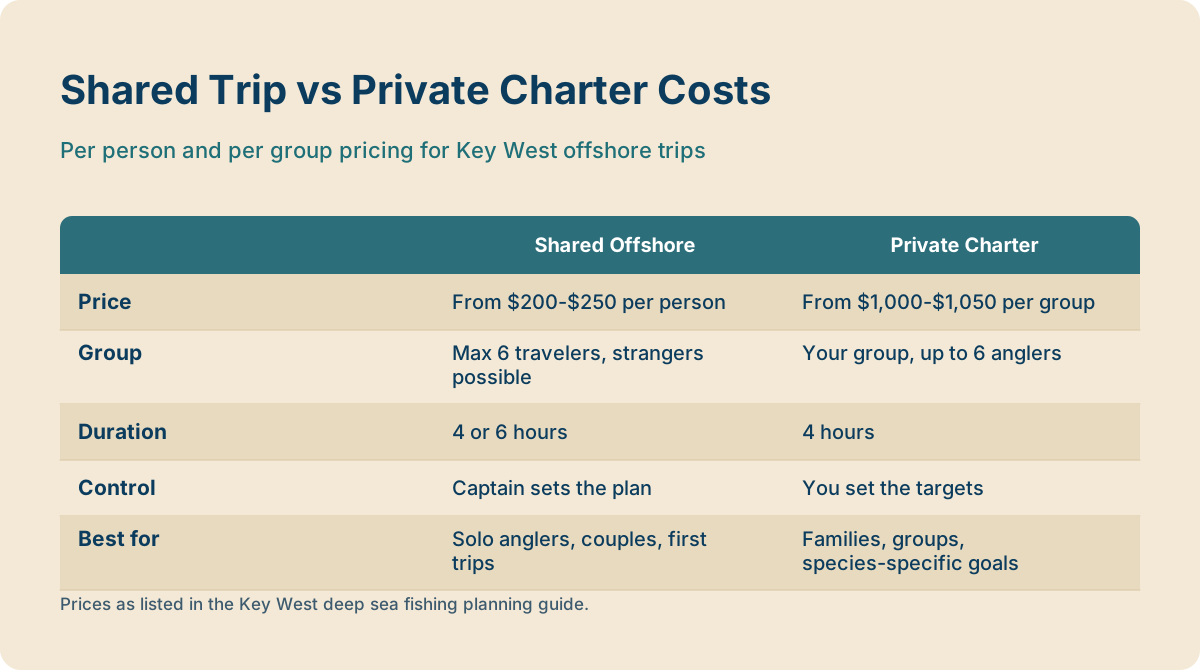
A shared offshore trip costs $200 to $250 per person and puts you on a small-group boat with a captain and mate who coach everyone, which suits solo travelers, couples and first-timers. A private charter costs $1,000 to $1,050 for the whole boat and gives your group up to 6 anglers full control of the target species, the pace and the schedule. Neither is universally better; the right choice depends on group size and budget.
The shared format is the entry point, and out of Key West it is a genuinely small-group product rather than a cattle boat. The 4-hour shared offshore trip caps the boat at 6 travelers with captain and mate coaching included, and it is rated 4.0 across 32 reviews, from $200 per person. The 6-hour version runs deeper water for tuna, mahi and kingfish with the same 6-traveler cap and one-on-one coaching, rated 4.5 across 34 reviews, from $250 per person. For a solo angler or a couple, that per-person math beats any private boat.
The private side buys control. The private sportfisher charter, rated 4.8 across 114 reviews and priced from $1,000 per group for up to 6 anglers, runs up to 18 miles offshore with outriggers, a fighting chair and a live bait tank, and it fishes both deep water and the reef in one trip. The 45-foot Hatteras "Cowgirl", rated 4.8 across 16 reviews and from $1,050 per group, adds an air-conditioned cabin and a boat that has been operating since 1965. Fill either boat with a full group of six and the per-person cost drops well below the shared-trip rate, which is where the private math starts working in your favor.
The honest tradeoff is flexibility against cost. On a shared trip you fish the plan the captain sets for the group, and you may share the cockpit with strangers whose skill and luck vary. On a private trip you can chase a specific species, keep a beginner's pace, or bring kids without worrying about other guests. The deeper comparison, including how party boats fit families, is laid out in the private charter versus party boat comparison.
| Shared Offshore Trip | Private Sportfisher Charter | |
|---|---|---|
| Price | From $200-$250 per person | From $1,000-$1,050 per group |
| Group | Max 6 travelers, strangers possible | Your group, up to 6 anglers |
| Duration | 4 or 6 hours | 4 hours |
| Control | Captain sets the plan | You set the targets |
| Best for | Solo anglers, couples, first trips | Families, groups, species-specific goals |
How Far Offshore Do Key West Charters Actually Go?
Most Key West deep sea charters work within about 18 miles of the dock, running to the edge of the reef and the blue water beyond it where mahi, tuna and kingfish hold. Four-hour trips fish the nearer edge, while 6-hour trips push into deeper water. The Gulf Stream current and the reef dropoff concentrate fish within that range, which is why short offshore trips work here when they would not elsewhere.
The private sportfisher charter states its range as up to 18 miles offshore, and that figure is a useful anchor for the whole fleet: beyond that distance, a 4-hour trip stops paying for itself in fishing time. The reef line itself sits a few miles out, and the water deepens quickly past it. Charters work the contour changes, wrecks and color shifts where bait stacks up rather than simply motoring to a fixed distance.
What changes with trip length is not the destination so much as the time spent working it. A 4-hour shared trip gets to fishable offshore water, works it, and comes home. The 6-hour shared version buys the run into deeper water where tuna and larger mahi hold, plus more time to relocate when one patch of ocean is dead. If the weather forecast is strong and the budget allows, the 6-hour format is the one that most reliably puts the trip over productive water.
One boundary that matters more than distance is the Florida Keys National Marine Sanctuary zoning. Several Sanctuary Preservation Areas and Ecological Reserves near Key West prohibit fishing by any means, marked with yellow buoys, and a January 2025 NOAA rule expanded the sanctuary boundary and adjusted several zones. Charter captains know these zones, but anglers rigging their own baits should check the official sanctuary regulations page before assuming any patch of water is open.
What Does A Deep Sea Fishing Charter In Key West Cost?
Shared offshore trips out of Key West run from $200 per person for 4 hours to $250 per person for 6 hours. Private deep sea charters run from $1,000 to $1,050 for the whole boat for up to 6 anglers. One private charter prices by head instead, from $54 to $156 per person depending on group size, with the per-person rate falling as the group fills. Tackle, bait and trip licenses are typically bundled into these prices.
The per-group pricing on most private boats is the number to compare against, not the headline. A $1,000 boat for two anglers costs far more per person than the shared trip at $200, more than double when you run the division. The same boat for six costs less per person than the 6-hour shared format once every seat is filled. The afternoon private deep-sea charter from Drop Off Sportfishing, rated 5.0 across 18 reviews, prices from $54 per person scaling to $156 depending on group size up to 6, and that sliding structure makes it the cheapest way for a small group to get a private offshore experience.
| Charter | Format | Duration | Price | Rating |
|---|---|---|---|---|
| 4-Hour Shared Offshore | Shared, max 6 | 4 hours | From $200 per person | 4.0, 32 reviews |
| 6-Hour Shared Offshore | Shared, max 6 | 6 hours | From $250 per person | 4.5, 34 reviews |
| Private Sportfisher, Fighting Chair | Private, up to 6 | 4 hours | From $1,000 per group | 4.8, 114 reviews |
| 45ft Cowgirl, AC Cabin | Private, group | 4 hours | From $1,050 per group | 4.8, 16 reviews |
| Afternoon Private Deep-Sea Charter | Private, up to 6 | 4 hours | $54-$156 per person | 5.0, 18 reviews |
What the base price includes varies less than you might expect. Across the deep sea roster, tackle, bait and fishing licenses for the trip are typically bundled, and the private sportfisher adds outriggers, a fighting chair and a live bait tank. What is generally not included is gratuity, which is a separate budget line, and the conventions are covered in detail in the tipping guide for Key West captains and crews. For the full cost picture across every charter format on the island, including party boats from $69.95, see the charter cost guide.
What Rules And Licenses Apply On An Offshore Trip?
Every angler on a Key West charter needs their own Florida saltwater fishing license, because the captain's for-hire vessel license covers the operation of the trip but does not exempt individual guests. Non-resident licenses cost $17 for 3 days, $30 for 7 days or $47 for the year. Some roster charters bundle a license while others do not, so check the listing. Bag limits apply once fish are in the box.
The license rule is the one that catches visitors off guard. The official FWC license page is explicit that a licensed captain's charter license does not cover individual anglers, so a non-resident booking a 4-hour offshore trip should plan on the $17 three-day license unless their charter states otherwise. Several products on this roster, including the shared offshore trips and the private bay boat charters, list a license as included in the trip price, which is worth confirming on the live listing before you book.
Bag and size limits shape what comes home. On the Atlantic side, mahi-mahi carry a 20-inch fork length minimum and a 5-fish per harvester daily limit, with captain and crew holding zero bag limits on for-hire vessels. Grouper rules are more complicated: Atlantic-side waters including Monroe County generally use a 3-fish aggregate bag limit per harvester, but seasons shift by executive order, so check the current open season on MyFWC.com before booking if grouper is on your wish list. Tarpon, if one shows up behind the boat, are catch-and-release only statewide, and fish over 40 inches must stay in the water (see Catch and Cook).
The sanctuary overlay applies offshore as well as inshore. No-take zones near Key West, including Western Sambo and the network of Sanctuary Preservation Areas, prohibit fishing entirely, and the 2025 Restoration Blueprint expanded boundaries and added zones such as the Turtle Rocks SPA. Your captain handles this in practice, but knowing the zones exist explains why a boat might pass up water that looks perfect.
How Do You Choose The Right Deep Sea Trip?
Match the trip to your group size, species target and budget, in that order. Solo anglers and couples: a shared offshore trip runs $200 to $250 per person. Groups of four to six wanting a specific species or a family pace should split a private sportfisher at $1,000 to $1,050 per group. Peak-season mahi anglers can succeed on a 4-hour format; deeper-water fish argue for the 6-hour run.
Start with the honest headcount. Two people on a $1,000 private boat are paying a per-person rate more than double the shared trip's $200, and for a first offshore trip the shared format is the rational buy. The shared trips on this roster cap at 6 travelers with coaching included, so the worst-case scenario, a crowded rail, is off the table by design.
Then match the format to the fish. The 6-hour shared trip exists because deeper water holds tuna and larger mahi, and if those are the targets, the extra $50 and two hours are the cheapest upgrade in the fishery. The 4-hour private sportfisher, rated 4.8 across 114 reviews, fishes both deep water and the reef in one trip, which makes it the flexible pick for groups that want meat fish in the box and a shot at something bigger on the same outing. The 45-foot Cowgirl, with its air-conditioned cabin and 4.8 rating across 16 reviews, is the choice when comfort matters as much as the catch, whether that means summer heat, kids who need a cool-down, or anglers who want to step out of the sun between bites.
Finally, book against the calendar, not the brochure. March through June compresses the most species into the same weeks, and that is exactly when the best boats fill. Every charter on this site can be checked for live availability on its own listing, and most offer free cancellation so a tentative plan can be locked early and adjusted later. For the wider decision between offshore and everything else Key West fishing offers, this Key West Fishing Tours guide hub compares all four charter formats side by side.
The private sportfisher with the fighting chair, from $1,000 per group and rated 4.8 across 114 reviews, is the product this site points most offshore anglers toward: it is the largest review pool in the deep sea category, it covers both deep water and the reef, and its per-group price splits well for a full boat. Check availability on the deep sea sportfisher charter page or compare it live against the shared formats before committing.
Common Questions About Deep Sea Fishing Out Of Key West
What Does Deep Sea Fishing Out Of Key West Actually Target?
Mahi-mahi, blackfin tuna, king mackerel and sailfish are the core offshore targets, with wahoo in winter and transition months. Charters troll over weed lines, color changes and the reef edge, typically within about 18 miles of the dock.
When Is The Best Time To Go Deep Sea Fishing In Key West?
April through June is the strongest overall window, overlapping the first mahi migration, good tuna action and the tail of the sailfish run. August through October brings a second mahi push with larger fish. Winter, November through March, is prime for sailfish and wahoo.
How Much Does A Deep Sea Fishing Charter In Key West Cost?
Shared offshore trips run from $200 per person for 4 hours to $250 per person for 6 hours. Private deep sea charters run from $1,000 to $1,050 per group for up to 6 anglers, and one afternoon private charter prices from $54 to $156 per person depending on group size.
Do I Need A Fishing License On A Key West Charter?
Yes, in most cases. A captain's for-hire license covers the operation of the trip but does not exempt individual anglers. Non-resident Florida saltwater licenses cost $17 for 3 days or $30 for 7 days. Some charters on this roster bundle a license, so check the listing.
Is A Shared Or Private Offshore Charter Better?
Shared trips suit solo anglers, couples and first-timers at $200 to $250 per person with a 6-traveler cap. Private charters suit groups of four to six who want to choose their targets and pace, and at full occupancy cost less per person than the shared format.
How Far Offshore Do Key West Charters Go?
Most work within about 18 miles of the dock, fishing the reef edge and the blue water beyond it. Four-hour trips fish the nearer edge; 6-hour trips push into deeper water where tuna and larger mahi hold.