Key West Fishing Season By Month: When Each Species Peaks
Tarpon flood the shallows in spring, mahi push through offshore currents in early summer and again in fall, and sailfish own the winter. Here is how the Key West fishing season stacks up month by month, and which charter format fits each window.
Short answer
The strongest all-around months are April through June, when tarpon, permit, mahi and reef species overlap. Tarpon peak February through July with April and May strongest, mahi run April through June and again August through October, and sailfish peak November through March. A 4-hour private sportfisher runs from $1,000 per group and a shared party boat from $69.95 per adult.
The Key West fishing season never actually closes. Something is always biting, which is the honest answer to the question every visiting angler asks, but the mix of species changes dramatically as the water warms from winter into the long calm days of summer. Tarpon, the fish that built this town's guiding industry, show up in force in February and stay through July. Mahi arrive with the warming currents in April. Sailfish and wahoo take over the offshore edge in November and hold through March.
Getting the month right matters more than almost any other planning decision, because it decides which charter format makes sense. A flats skiff trip in August targets a completely different fishery than the same trip in May. This guide lays out the season month by month, using current charter calendars, FWC regulations and the 2026 tournament schedule as its sources, and matches each window to the boat type that fishes it best. The full comparison lives in our guide to Key West fishing charters compared, and this page builds on it with the timing layer.
What Fish Are In Season In Key West Each Month?
Every month of the year produces fish in Key West, but the species mix rotates: tarpon and permit own February through July, mahi push through in April to June and again August to October, sailfish and wahoo dominate November through March, and reef species like mutton and yellowtail snapper bite year-round. The single best stretch for variety is April through June, when the flats, the reef and the offshore edge are all producing at once. That overlap is why spring books out first and why charter prices hold steady while calendars fill.
Charter calendars from working Key West operations list which species is prime in which month, and the pattern is remarkably consistent across sources. The table below compresses that into a planning scorecard. Treat it as the baseline, then adjust for weather: a late cold front can delay the tarpon push by a week or two, and an early summer heat wave can move mahi further offshore.
| Month | Flats / Backcountry | Offshore / Deep Sea | Reef | Notes |
|---|---|---|---|---|
| January | Bonefish | Sailfish (peak), blackfin tuna, wahoo | Yellowtail, grouper (when open) | Sailfish peak season underway |
| February | Tarpon (early), bonefish | Sailfish, wahoo | Yellowtail, mutton | First big tarpon arrivals |
| March | Tarpon, permit (spawning runs begin) | Sailfish, blackfin tuna | Mutton, yellowtail | March Merkin permit tournament, March 9-12 |
| April | Tarpon (strong), permit | Mahi (first run), tuna | Mutton, yellowtail | Peak variety month |
| May | Tarpon (peak), permit | Mahi, tuna | Mutton, grouper (when open) | Strongest tarpon month per 2026 telemetry data |
| June | Tarpon, permit, bonefish | Mahi, tuna | Mutton, yellowtail | Longest days, calmest mornings |
| July | Tarpon (late run), permit | Mahi, kingfish | Mutton, yellowtail | Key West Marlin Tournament, July 22-25 |
| August | Permit, bonefish | Mahi (second run begins) | Yellowtail, grouper (when open) | Hot afternoons, fish early |
| September | Permit, bonefish | Mahi (larger fish), wahoo (late) | Yellowtail | IGFA Permit Invitational, Sept 29-Oct 2 |
| October | Bonefish, permit | Mahi (second run ends), wahoo | Yellowtail, mutton | Fall transition month |
| November | Bonefish | Sailfish (arrivals), wahoo, blackfin | Yellowtail, grouper (when open) | Sailfish run begins |
| December | Bonefish | Sailfish, wahoo, tuna | Yellowtail, mutton | Fronts start, offshore still strong |
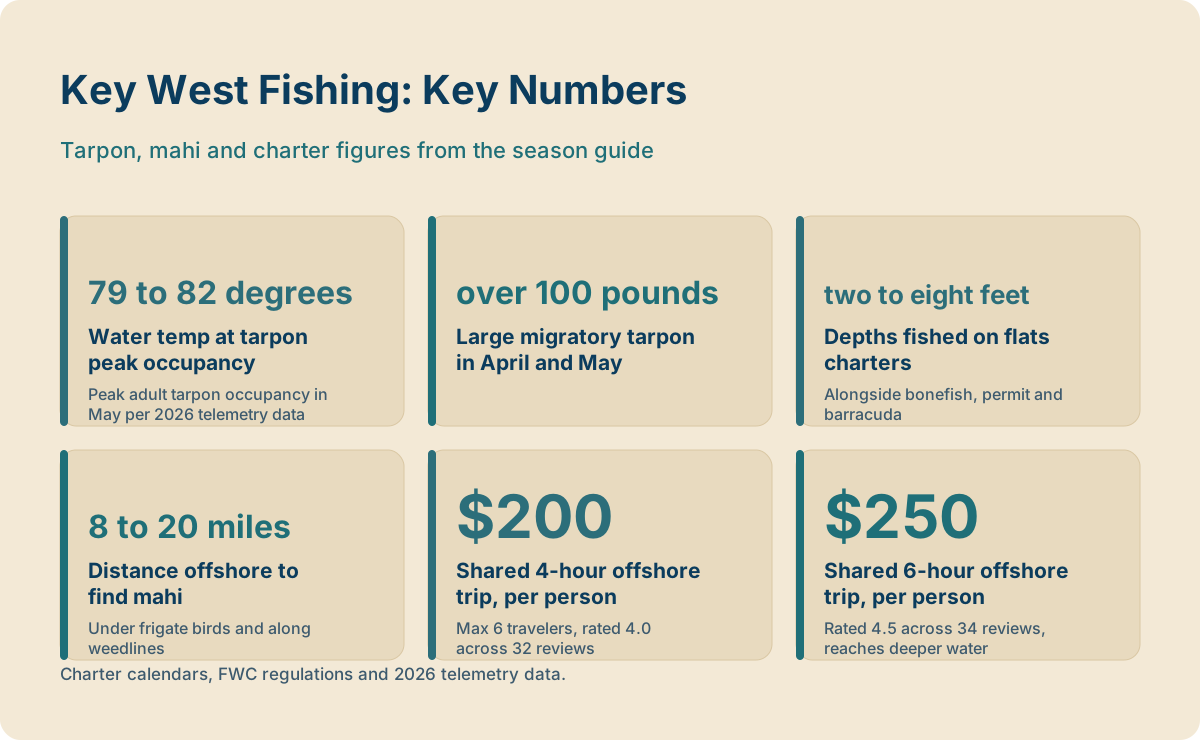
A few patterns deserve emphasis. The tarpon migration is the spine of the spring season: 2026 telemetry work puts peak adult occupancy in May as water temperatures reach 79 to 82 degrees, with median arrivals in mid-to-late April and departures in late May or early June. Charter calendars stretch that productive window from March through June, since early and late fish hold in deeper channels even when the main schools have passed. The second mahi run, August through October, is the season's most underused window: the fish are often larger, the crowds are thinner, and the weather between fronts is at its calmest.
Reef fishing is the steady backdrop to all of this. Mutton snapper are listed as prime in eight separate months on working charter calendars, and yellowtail in four, with consistent action in the months between. Grouper action is tied less to biology than to regulation, since seasons open and close by executive order. Check the current open season on MyFWC.com before booking if grouper is the target, and read our Key West reef fishing guide for the full breakdown of that fishery.
When Is Tarpon Season In Key West?
Tarpon season in Key West runs February through July, with April and May as the strongest period for large migratory fish, many over 100 pounds, and May as the single best month according to 2026 telemetry data that tracked peak adult occupancy as water temperatures reached 79 to 82 degrees. Charter calendars list March, April, May and June as prime months, with median arrivals in mid-to-late April and departures by early June. The fishery is strictly catch-and-release statewide, so every tarpon trip is about the fight, not the fillet.
The regulations shape the experience more than most visitors expect. Tarpon are catch-and-release only in both state and federal waters, fish over 40 inches must stay in the water, and a tarpon tag is required only if you are pursuing a state or world record, per the FWC's tarpon rules at myfwc.com. Hook-and-line is the only legal method. None of this diminishes the fishing, it defines it: the silver king is a sport fish here in the purest sense.
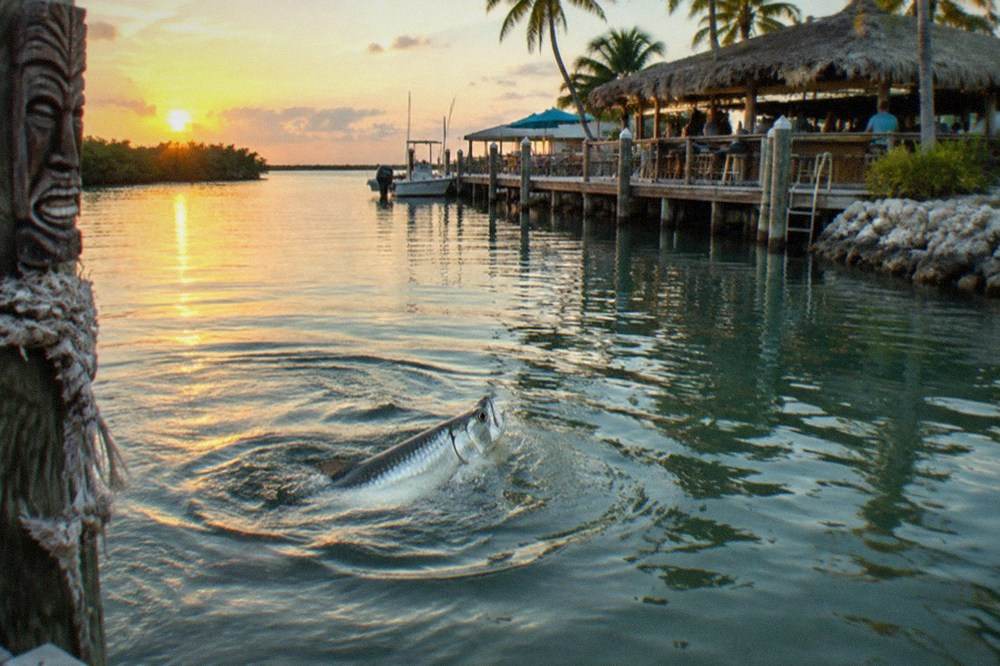
Format matters enormously in tarpon season. The fish hold in two distinct places: the shallow flats and channels of the backcountry, where sight fishing to rolling fish is the classic game, and the deeper channels and bridges where big females stage. Flats charters fish depths of two to eight feet for tarpon alongside bonefish, permit and barracuda. The Ramrod Key flats charter, rated 5.0 across 45 reviews and from $1,595 per group for four hours, is built exactly for this window. Backcountry bay boat trips, like the private inshore charter from Live Action Sportfishing rated 5.0 across 14 reviews at from $800 per group, cover more water and add shark, snapper and cobia to the target list.
Timing within the day matters as much as timing within the season. Guides consistently fish the first three hours of daylight in April and May, when the wind is lightest and the fish are most visible on the flats. By midsummer the tarpon bite shifts earlier still or to the evening channels. If your trip dates are fixed by school holidays or a cruise port call, tell the operator which week you have and let them pick the venue, the fishery is wide enough that a good captain finds fish in every month of the season.
The deeper background on this fishery, including the tackle and the tag rules, is in our dedicated tarpon fishing in Key West guide. For the season planner, the short version is this: book flats trips for April through June, expect the biggest fish in May, and treat February and July as shoulder months with real shots but thinner schools.
When Do Mahi-Mahi Run Offshore From Key West?
Mahi-mahi arrive off Key West with the first sustained spring warming, peak April through June, and return in a second, often larger migration from August through October, with charter calendars listing April, May, June, August and September as the prime months. The first run is the famous one, with schools following the blue water current lines past the Keys. On the Atlantic side the rules are a 20-inch fork length minimum and five fish per harvester per day, with a vessel cap of 30 that does not apply to for-hire boats, per the FWC's pelagic regulations at eregulations.com.
By late April, bull and cow dolphin follow the edge of the blue water current lines that sweep past the Keys, and charter boats find them under frigate birds and along weedlines anywhere from 8 to 20 miles out. The second run, starting in August, gets less attention and often produces bigger fish: as summer wanes, the dolphin that stayed offshore put on weight, and the weather between fronts is the calmest of the year. September and October trips regularly produce fish that outsize the spring average.
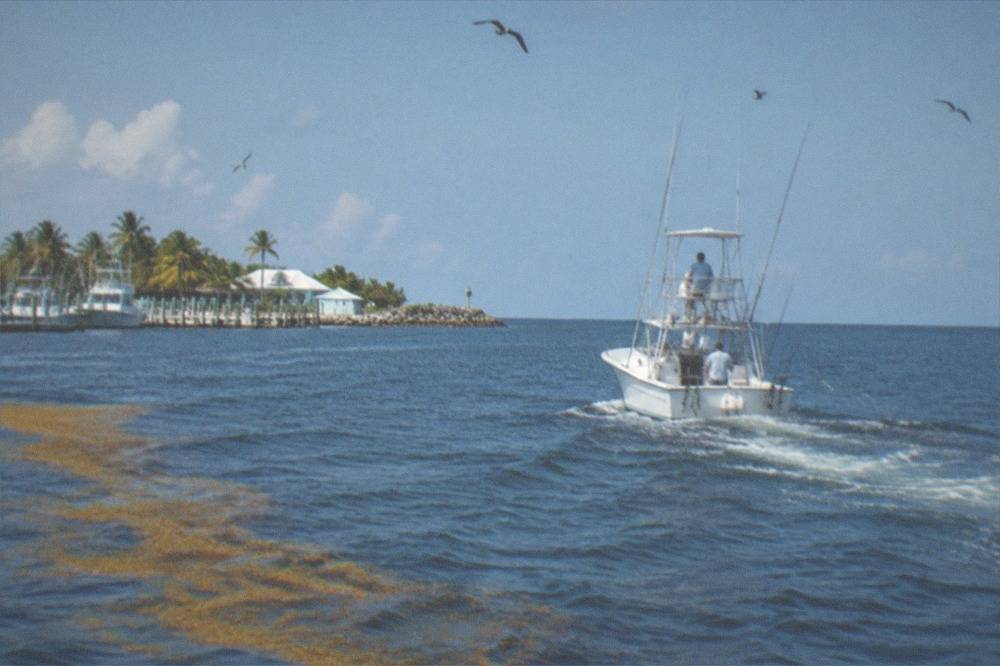
This is the fishery that decides your boat format. Mahi live in water that a bay boat cannot comfortably reach, so the choice is between a shared offshore trip and a private sportfisher. The shared 4-hour offshore trip, max 6 travelers and from $200 per person, rated 4.0 across 32 reviews, is the low-commitment option, and the 6-hour version at from $250 per person, rated 4.5 across 34 reviews, reaches deeper water where the schools hold. The private sportfisher route is the most productive: a 4-hour private charter with outriggers, a fighting chair and a live bait tank, running up to 18 miles out, from $1,000 per group for up to six anglers and rated 4.8 across 114 reviews. That private sportfisher also fishes the reef on the same trip, which matters in months when the mahi bite is a long run from shore.
The mahi window also overlaps the summer tournament calendar. The Key West Marlin Tournament runs July 22-25, 2026, timed to the Hemingway Days festival, and the Viking Yachts Key West Challenge follows in the spring billfish season, April 8-12 (see Hemingway and Key West). Neither targets dolphin directly, but both concentrate offshore effort in the same blue water, and visiting anglers in those weeks should book early because the charter fleet is committed to tournament teams.
What Months Are Best For Sailfish And Wahoo?
For sailfish, plan your Key West trip between November and March, when these fish peak, with January standing out as the single strongest month. Wahoo follow a similar winter schedule but add a late-summer bonus, so their prime months are January, February, August, September, November and December. Charter calendars mark sailfish as prime in October for first arrivals, then November, December and January. This is the winter fishery, and it is the reason the offshore fleet stays busy when the flats boats slow down and the backcountry guides turn their attention to whatever the season offers.
The winter sailfish run works differently from the spring fisheries. Fish travel in waves that follow cold fronts, and the bite is best in the first day or two after a front passes, when wind pushes bait and sailfish up on the edge. That makes winter offshore trips a weather play: the calendar says January, but the actual decision is made the morning of, watching the wind. Six-hour trips have the edge over four-hour runs here because the fish often hold further down the edge.
Wahoo fill the same months and the same water, with a bonus window in late summer. They are a trolling fish taken on high-speed lures over the reef edge and the deeper wrecks, and charter calendars list them as prime in January, February, August, September, November and December. For a winter trip that wants both species plus tuna and kingfish, a private sportfisher with outriggers is the right tool, and the shared 6-hour offshore trip is the budget alternative. The Key West Sailfish Tournament, March 26-28, 2026, caps the winter season.
Winter is also when the reef fishery carries the day if the wind shuts down the offshore edge. Yellowtail and mutton snapper bite well in January and December, and a party boat or a reef-focused private trip is the reliable fallback. Our Key West deep sea fishing guide covers the winter offshore tactics in more depth.
When Is Permit Fishing At Its Best?
Permit fishing in Key West is at its best from March through July, when spawning runs begin at the end of March and continue into the summer months. A second productive window arrives in fall, running from September through November, giving anglers another strong shot at these fish before winter, according to charter calendars and the 2026 tournament schedule. Charter operators highlight March and April as the prime months. The tournament calendar confirms the timing: the March Merkin Permit Tournament, an invitation-only fly fishing event, runs March 9-12, and the IGFA Permit Invitational follows September 29 to October 2, bracketing the season at both ends.
Permit are the connoisseur's flats fish, arguably harder to fool than tarpon and more weather-dependent. They show up on the same flats and channels as the tarpon migration, which makes spring flats trips a two-species proposition: a morning that starts on rolling tarpon can finish casting crabs to cruising permit. The Ramrod Key flats charter, fishing two to eight feet of water and rated 5.0 across 45 reviews, lists permit among its primary targets alongside tarpon and bonefish.
Permit are subject to state size and bag limits, and some Florida Keys zones carry seasonal harvest closures tied to spawning aggregations, so the catch-and-release ethos that guides tarpon fishing applies here too. A flats charter that targets permit in April is fishing the same water the March Merkin fields fish two weeks earlier, which is as good a proof of timing as the sport offers.
Bonefish round out the flats trio and are the year-round glue of the backcountry: listed as prime in seven separate months, with the strongest stretches in March through June and again in October and November. Unlike tarpon and permit, bonefish do not migrate away, so a flats trip in any month has a real bonefish shot.
Which Charter Format Fits Each Season?
Match the boat to the month: flats and backcountry skiffs own February through July for tarpon, permit and bonefish, private sportfishers and shared offshore boats own April through June and August through October for mahi, winter belongs to offshore sailfish trips, and party boats fish the reef productively in all twelve months. The format decision is worth as much as the calendar decision, because the wrong boat in the right month still produces a slow day. A flats skiff in December is a bonefish trip, not a tarpon trip, and a party boat in May will never see a permit.
| Season window | Target species | Best format | Example product | Price |
|---|---|---|---|---|
| Feb-July | Tarpon, permit, bonefish | Private flats or bay boat charter | Tarpon Flats Charter, Ramrod Key | From $1,595 per group |
| April-June, Aug-Oct | Mahi, tuna, kingfish | Private sportfisher or shared offshore | Private Sportfisher, Fighting Chair | From $1,000 per group |
| Nov-March | Sailfish, wahoo, tuna | Private sportfisher, 6-hour shared | 6-Hour Shared Offshore, Max 6 | From $250 per person |
| All year | Snapper, grouper (when open) | Party boat or reef-capable private | Shared Catamaran, Filleting Included | From $95 per person |
| All year | Mixed backcountry | Private inshore charter | Private Inshore, Channel Trolling | From $750 per group |
The party boat deserves a specific mention in any season discussion because it is the one format whose value does not swing with the calendar. The 64-foot catamaran half-day trip, rated 4.5 across 505 reviews and from $95 per person, fishes the reef where yellowtail and mutton bite in every month, and the 6-hour party boat at from $69.95 per adult runs day or night departures. Reef fish do not migrate, so the party boat is the reliable choice for a family trip in August or a first trip in December. Our Key West party boat fishing guide compares those two products in detail.
For groups that want a private experience without the offshore price, the inshore private charters are the season-proof middle ground. The half-day inshore trip trolling backcountry channels, rated 5.0 across 72 reviews and from $750 per group, produces tarpon, shark and snapper in spring and jacks, barracuda and snapper the rest of the year. The backcountry charter from Recon Sportfishing, from $800 per group for up to four anglers and rated 5.0 across 19 reviews, stays within 13 miles of Key West and fishes the same mixed fishery. Neither is calendar-dependent in the way a tarpon-specific trip is.
What Else Should You Plan Around The Season?
Beyond the fish calendar, plan around three things: your Florida saltwater fishing license, the sanctuary's no-take zones, and the tournament calendar, because all three can change what your trip looks like on the water, and none of them show up in the species tables above. The license point trips up the most visitors. A licensed captain's for-hire vessel license covers the operation of the trip, but it does not exempt individual anglers from holding their own recreational saltwater license, per the FWC's license page at myfwc.com. Non-resident licenses run $17 for three days, $30 for seven days and $47 for the year.
The full license picture, including who is exempt, is covered in our Key West fishing license requirements guide, and it is worth reading before any trip. Some charter products in the roster include the license in the headline price and others do not, which is a real difference in out-of-pocket cost, not marketing.
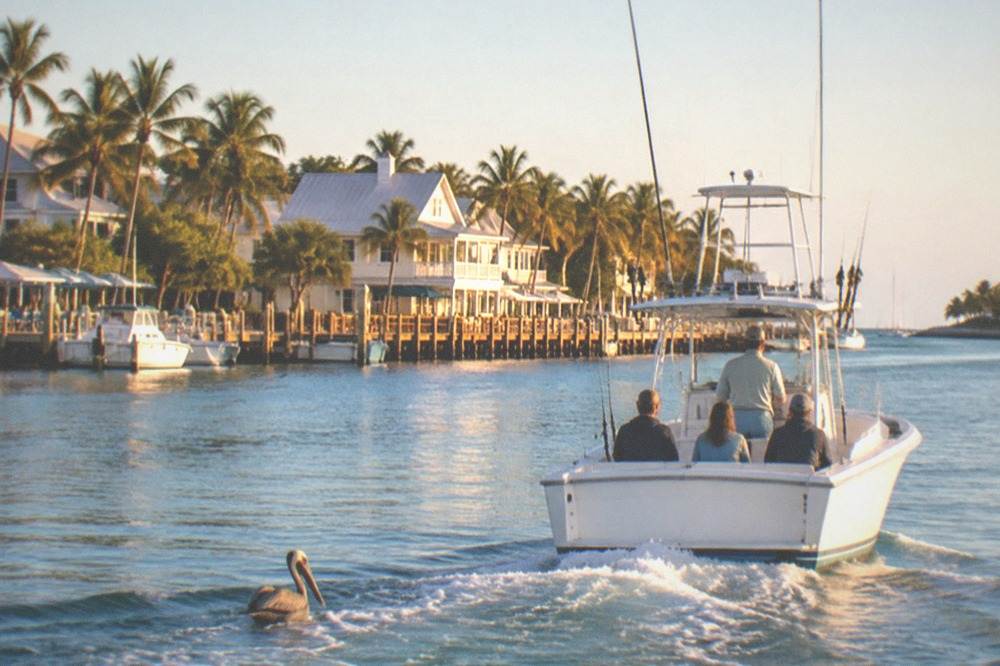
The Florida Keys National Marine Sanctuary overlays state and federal fishing rules with its own zoning. Sanctuary Preservation Areas and ecological reserves, marked with yellow buoys, prohibit fishing by any means, and the January 2025 Restoration Blueprint expanded the sanctuary boundary and added zones, with some anchoring restrictions phasing in through 2027. Current maps live at floridakeys.noaa.gov. Charter captains know the zones, but anglers booking their own boats or checking a captain's claims should verify boundaries rather than assume. Our blog post on Florida Keys National Marine Sanctuary fishing rules explains the zones in full.
The tournament calendar is the quiet variable. Six confirmed events crowd the 2026 schedule, and they cluster in the spring and fall shoulder seasons when the fishing is at its best anyway. Tournament weeks mean the best captains are booked and the marinas are busy, but they also mean the fishery is producing at a level worth competing over. Anglers who want a quiet boat should avoid those weeks; anglers who want to watch the weigh-ins should build a trip around them.
| 2026 Tournament | Dates | Species focus | Season signal |
|---|---|---|---|
| March Merkin Permit Tournament | March 9-12 | Permit on fly | Flats permit season opening |
| Key West Sailfish Tournament | March 26-28 | Sailfish | End of the winter offshore run |
| Spanish Fly Shark Tournament | April 2-4 | Shark | Spring backcountry action |
| Viking Yachts Key West Challenge | April 8-12 | Billfish | Spring offshore peak |
| Key West Marlin Tournament | July 22-25 | Blue marlin | Summer blue water season |
| IGFA Permit Invitational | September 29 - October 2 | Permit on fly | Fall flats window |
One last planning layer: month choice changes the weather risk more than most visitors realize. Summer afternoons bring thunderstorms and the hurricane season's long tail, winter brings cold fronts that can cancel offshore days, and the shoulder months of April, May, October and November split the difference with the most fishable days. The honest broker advice from Key West Fishing Tours is to book the month that matches your target species, then build a one-day buffer into the trip so a weather cancellation does not cost the whole plan. Most operators on the live listings offer free cancellation, and the buffer day is the cheapest insurance in fishing.
Common Questions About The Key West Fishing Season
What Is The Best Month To Fish In Key West?
April through June is the strongest stretch, when tarpon, permit, the first mahi run and year-round reef species all overlap. May is the single best tarpon month according to 2026 telemetry data, with peak adult occupancy as water temperatures reach 79 to 82 degrees. For fewer crowds with big fish, September and October deliver the second mahi run.
Can You Fish In Key West Year-Round?
Yes. Every month produces fish, but the species mix rotates: tarpon and permit from February through July, mahi from April through June and again August through October, sailfish and wahoo from November through March, and reef species like mutton and yellowtail snapper in all twelve months. The format matters as much as the month.
What Month Is Tarpon Season In Key West?
Tarpon season runs February through July, with April and May the strongest period for large migratory fish, many over 100 pounds. Charter calendars list March, April, May and June as prime. The fishery is strictly catch-and-release statewide, and fish over 40 inches must remain in the water.
When Is Mahi Season In Key West?
There are two mahi runs: the main spring migration from April through June, and a second, often larger-fish run from August through October. Charter calendars list mahi as prime in April, May, June, August and September. Atlantic-side rules set a 20-inch fork minimum and five fish per harvester per day.
Is Winter A Good Time To Fish In Key West?
Yes, for the offshore edge. Sailfish peak November through March with January the strongest month, and wahoo share the window. Winter is also reliable on the reef, where yellowtail and mutton snapper bite year-round. The main risk is cold fronts canceling offshore days, so build a buffer day into the trip.
Do I Need A Fishing License For A Key West Charter?
Yes, in most cases. A licensed captain's for-hire vessel license covers the operation of the trip but does not exempt individual anglers from holding their own recreational saltwater license. Non-resident licenses cost $17 for three days, $30 for seven days or $47 for the year. Some charter products include the license in the price and others do not, so check the listing.